Strategic Sourcing Intelligence
China-to-Egypt Apparel Logistics & Manufacturing Overview
Navigating the international procurement of outerwear requires aligning specialized textile engineering with local market nuances, tariff frameworks, and regional climate needs. As Egypt’s apparel retail sector expands across commercial hubs like Greater Cairo, Alexandria, and the Red Sea Riviera, local importers, retail chains, and boutique fashion brands face strict operational hurdles: managing currency exposure, maintaining compliance with the Egyptian General Organization for Export and Import Control (GOEIC), and securing reliable lead times ahead of peak winter shopping seasons.
This comprehensive B2B sourcing whitepaper delivers actionable information gain for Egyptian apparel buyers seeking top-tier OEM and ODM Chinese suppliers for quilted jackets, padded coats, and technical outerwear. By controlling every stage—from fiber extrusion to sealed pre-production sampling and port delivery at Alexandria or Port Said—Chinese apparel manufacturers offer unmatched unit cost efficiency, high fabric quality standards, and compliance-ready logistics under Egypt's Nafeza (ACID) electronic customs system.
16+
Years Outerwear Expertise
10,000+
Developed Custom Blocks
AQL 2.5
Inspection Standard
55+
Global Export Markets
Key Drivers Shaping Egypt's Outerwear Sourcing Landscape
Egypt's apparel retail ecosystem has undergone structural shifts driven by macroeconomic developments, evolving consumer demographics, and modern trade regulations. For Egyptian brands sourcing from Chinese factories, understanding these trends is vital for maintaining catalog competitiveness:
1. The Shift Toward Lightweight Thermal Efficiency
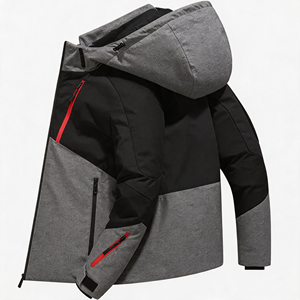
Unlike European markets that demand heavy-duty arctic sub-zero insulation, the Egyptian winter climate (spanning November to March) demands adaptable layering options. Temperatures in urban Cairo typically fluctuate between 10°C at night and 21°C during the day. Consumers are increasingly abandoning bulky, restrictive heavy coats in favor of ultra-lightweight quilted jackets engineered with 60 GSM to 120 GSM recycled polyester insulation. These garments offer optimal thermal insulation without excessive weight, allowing comfortable daily commuting across Metro lines and outdoor urban activity.
2. Rapid Growth of Modern Urban Streetwear
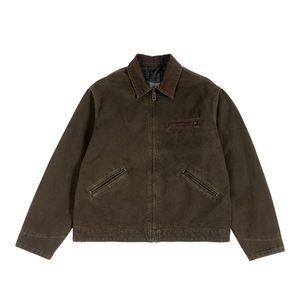
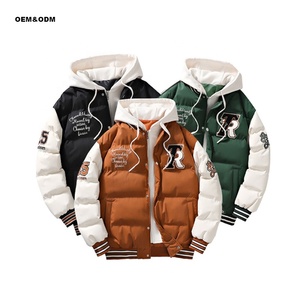
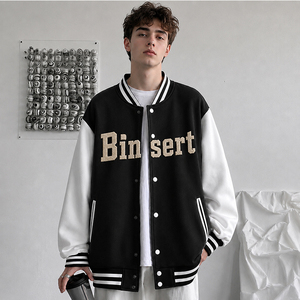
Driven by a large youth demographic in cities like New Cairo, 6th of October City, and Mansoura, streetwear has evolved into a dominant fashion category. Classic diamond-quilted bomber jackets, oversized embroidered workwear silhouettes, and varsity jackets featuring custom chenille patches are experiencing strong sell-through rates. Egyptian private labels are leveraging Chinese low-MOQ (Minimum Order Quantity) manufacturing options to launch seasonal micro-capsules tailored to fast-moving streetwear trends.
3. Demand for Sustainable and GRS-Certified Fabrics
Environmental compliance is moving from a niche preference to a mass-market requirement. Top Egyptian retailers seeking international brand partnerships are specifying Global Recycled Standard (GRS) fabrics spun from post-consumer rPET bottles. Modern Chinese weaving mills integrate eco-friendly fluorine-free Durable Water Repellent (PFC-free DWR) treatments with GRS-certified polyesters, providing verified sustainability documentation for customs clearance and marketing appeals.
Information Gain: Thermal Density Calibration for Egypt
Standard European winter jackets typically use 180–250 GSM synthetic fill, causing thermal discomfort in Egyptian urban environments. Premier Chinese exporters for Egypt calibrate synthetic insulation to 80–120 GSM for body panels and 60–80 GSM for sleeves. This micro-calibration reduces garment weight, slashes ocean freight volume costs by 18%, and perfectly aligns with Egyptian winter temperature curves.
Localized Application Scenarios in the Egyptian Market
Outerwear performance varies significantly across Egypt's distinct geographical regions and retail channels. Customizing garment specifications based on local end-use scenarios ensures fewer end-consumer returns and higher brand equity.
Urban Commuting in Greater Cairo
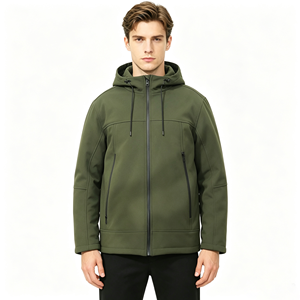
High diurnal temperature swings demand breathable windproof shells (20D/380T nylon ripstop) with compact quilted baffles. Highly packable into commuter bags for transit between daytime meetings and evening social venues.
Coastal Humidity in Alexandria & North Coast
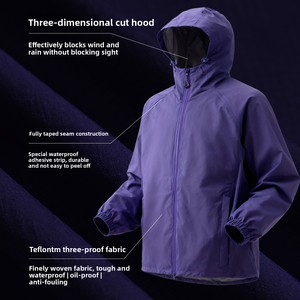
Alexandria's humid winters bring damp sea breezes and sporadic winter rainfall (Nawwats). Outwear specs require 5,000mm hydrostatic head lamination, anti-corrosion resin zippers, and sealed baffle stitching to prevent dampness penetration.
Red Sea & Sinai Desert Microclimates
Staff uniforms and outdoor activity wear in Sharm El Sheikh, Hurghada, and Sinai desert tours require heavy-duty canvas quilted shells, high tear strength, and fleece-lined interiors designed for rapid night-time desert cool-downs.
Technical Apparel Engineering: Custom Quilted Jacket Specifications
Securing a competitive edge in wholesale jacket procurement requires precise technical tech-packs. Below is the technical specification matrix standardized by premier Chinese OEM exporters for Egyptian importers:
| Apparel Component |
Standard Commercial Grade |
Premium Export Grade (Oasis Recommended) |
Performance Benefit for Egyptian Market |
| Outer Shell Fabric |
190T Polyester Taffeta |
20D / 380T Matt Nylon Ripstop with DWR |
Enhanced tear strength, silky hand-feel, lightweight water repellent. |
| Internal Fill / Insulation |
100% Raw Polyfill (150 GSM) |
GRS-Certified Recycled Micro-Polyfill (80-120 GSM) |
Optimal thermal-to-weight ratio, eco-certified for brand marketing. |
| Quilting Construction |
Standard Straight Stitch |
Computerized Ultrasonic Welded / Diamond Stitch |
Prevents fiber migration and cold spots; no needle-hole water leakage. |
| Lining Fabric |
170T Polyester |
210T Anti-Static Down-Proof Polyester / Satin |
Eliminates static cling in dry desert air; premium touch sensation. |
| Hardware & Closures |
Standard Local Nylon Zippers |
YKK / Custom Branded Anti-Corrosion Resin Zippers |
Smooth operation; resistant to coastal salt-air oxidation in Alexandria. |
| Quality Control Standard |
Visual Batch Checking |
Full Inline Inspection + Final AQL 2.5 Audit |
Guarantees zero structural defects and precise size grading specs. |
Why Chinese Manufacturers Outperform Regional Competitors for Egypt
While regional manufacturing options exist, Chinese outerwear factories retain a structural advantage in technical outerwear production. Outerwear is a component-heavy apparel category—a single quilted jacket requires up to 25 distinct components, including shell fabrics, down-proof membranes, pocketing, polyfill, binding tapes, snap buttons, zippers, drawcords, and branded trims.
1. Complete Upstream Supply Chain Integration
China's textile manufacturing clusters (in Zhejiang, Jiangsu, and Fujian provinces) house integrated supply ecosystems where fabric weaving, dyeing, functional coating lamination, and computerized quilting occur within close geographic proximity. This vertical integration allows factories to offer custom lab-dips within 3 to 5 days, drastically reducing development cycles compared to non-integrated regional hubs.
2. Advanced Computerized Quilting & Seamless Welded Baffle Technology
Modern Chinese facilities utilize multi-needle automated quilting machines and seam-sealing heat-press equipment. Automated laser-cutting machinery guarantees pattern precision across thousands of units, ensuring that graded size curves (from S up to 5XL) maintain identical ergonomic proportioning.
3. Navigating Egypt's Regulatory Landscape (GOEIC & Nafeza System)
Importing garments into Egypt requires compliance with strict administrative frameworks. Under Egyptian Ministry of Trade and Industry Decree No. 43/2016, factories exporting apparel to Egypt must be registered with the General Organization for Export and Import Control (GOEIC). Top Chinese exporters maintain existing GOEIC audit approvals and fully understand the Nafeza electronic portal system:
- ACID Number Generation: Providing verified shipment details prior to vessel loading so Egyptian importers can generate the mandatory 19-digit Advanced Cargo Information Declaration (ACID) number.
- Form 430 & Pre-Shipment Inspection: Coordinating third-party lab inspection certificates (SGS, Intertek, Bureau Veritas) to verify color fastness, dimensional stability, and fiber content composition as mandated by Egyptian customs.
- Certificate of Origin (CO): Issuing legalized Chamber of Commerce Certificates of Origin to facilitate smooth port customs clearance at Dekheila, Alexandria, or Sokhna.
Frequently Asked Questions for Egyptian Wholesale Buyers
What is the typical ocean freight transit time from Chinese ports to Egypt?
Direct sea freight shipments departing from primary Chinese ports (such as Ningbo, Shanghai, or Shenzhen) to Egyptian main ports (Alexandria, Port Said West/East, and Sokhna) typically take between 20 to 30 days depending on the shipping line (e.g., COSCO, Maersk, CMA CGM). Allowing an additional 5 to 7 days for Nafeza custom clearance procedures at the Egyptian port ensures seamless schedule planning.
How do Chinese factories support Egyptian buyers navigating foreign exchange & L/C terms?
Experienced exporters understand Egyptian banking payment rules. We accept confirmed Letter of Credit (L/C at sight) from accredited Egyptian commercial banks, as well as flexible Telegraphic Transfer (T/T) deposit structures (e.g., 30% deposit upon PP sample approval, 70% balance upon Bill of Lading release). We also work with buyer-designated buying agents and freight forwarders.
Is your factory GOEIC registered for direct export to Egypt?
Yes. Operating under certified quality management systems (ISO 9001, BSCI, OEKO-TEX Standard 100), our partner production facilities maintain registered status under GOEIC decree 43/2016. We supply all required legal documents, audited factory profiles, and certified test reports to ensure your shipments are never detained at Egyptian ports.
What is the Minimum Order Quantity (MOQ) for custom private label quilted jackets?
For styles utilizing in-stock mill fabrics and colors, our baseline MOQ starts at just 300 to 500 pieces per style across multiple size splits. For custom mill-dyed pantone shades or specialized engineered jacquard fabrics, the MOQ is generally 1,000 pieces per colorway. We specialize in helping emerging Egyptian streetwear and retail brands scale their initial buy safely.
Can we request custom branding, care labels, and Egyptian Arabic content tags?
Full private label customization is standard. We produce custom woven neck labels, branded silicone/metal badges, embossed zipper pullers, custom retail hangtags, and dual-language (English/Arabic) care & content labels fully compliant with Egyptian consumer protection and textile labelling standards.
How does the sampling and pre-production approval process work?
Once a tech-pack or reference garment is received, we create paper patterns and dispatch a initial proto sample within 7 to 10 days. Upon receipt of your fit feedback and fabric lab-dips, a sealed Pre-Production (PP) sample is crafted. Bulk production commences only after your written approval of the sealed PP sample, which serves as the strict reference benchmark for our inline QA team.
Streamlining Your Outerwear Supply Chain with Confidence
Selecting the right Chinese manufacturing partner is the single most critical decision for Egyptian outerwear distributors and retail brand managers. By combining advanced technical fabric selection, climate-calibrated insulation density, rigorous AQL 2.5 quality control, and full compliance with Egyptian export regulations, premier Chinese factories provide the scale, quality, and security needed to maximize commercial margins.
Whether you are launching a new streetwear collection in Cairo, equipping corporate teams in Alexandria, or expanding an established retail catalog across North Africa, our dedicated merchandising desk is ready to translate your tech-packs into commercial reality.
Ready to Scale Your Outerwear Sourcing for Egypt?
Submit your design sketch, tech-pack, or target retail price point today. Receive a comprehensive tech-pack evaluation, fabric option matrix, and factory-direct quotation within 24 hours.