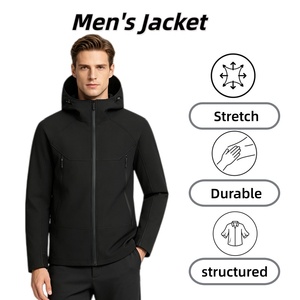
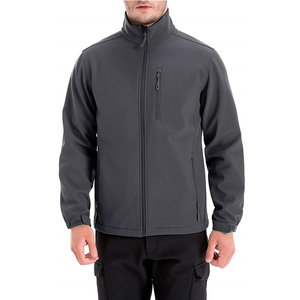
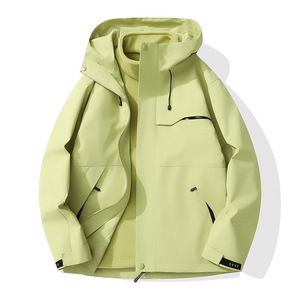
Softshell Outerwear Manufacturing: Industry Architecture & B2B Procurement Engineering
In the evolving landscape of technical apparel, softshell outerwear represents the nexus of mechanical flexibility, environmental protection, and thermal regulation. Unlike traditional hard-shell garments that rely on rigid non-stretch membranes to repel precipitation, modern engineered softshells leverage woven elastomeric outer face fabrics bonded to microporous Thermoplastic Polyurethane (TPU) or hydrophobic membranes, finished with brushed polar fleece or honeycomb grid backers. This complex tri-laminate composite structure allows global apparel brands, tactical gear suppliers, and industrial safety distributors to offer versatile weatherproofing across volatile microclimates.
As leading OEM/ODM softshell apparel manufacturers operating under rigorous ISO 9001 and Global Recycled Standard (GRS) frameworks, our production infrastructure bridges raw textile science with high-volume garment execution. Sourcing commercial outerwear demands a clear understanding of dynamic moisture vapor transmission rates (MVTR), hydrostatic head tolerances, ultrasonic seam construction, and carbon-neutral supply chain compliance. This industry guide details technical considerations for bulk softshell procurement, material engineering, and supplier verification.
Technical Benchmark: A high-performance 3-layer softshell must achieve a minimum hydrostatic head resistance of 10,000 mm (ISO 811) paired with a water vapor permeability exceeding 10,000 g/m²/24h (JIS L 1099 B-1), utilizing PFC-free C0 durable water repellent (DWR) surface chemistry.
Material Science: Breakdown of the 3-Layer (3L) Softshell Construction
To optimize product development for private label collections, apparel buyers must analyze the structural layer composition of technical softshell materials. The performance of the finished outerwear directly correlates with the quality of lamination and textile bonding techniques employed during mill processing.
Traps warm air near skin, wicks capillary condensation away from membrane layer, adds soft hand-feel.
ISO 12945-2 (Anti-Pilling Grade 4-5), AATCC 195 Liquid Moisture Management
Our mill bonding processes utilize PUR (Polyurethane Reactive) hot-melt adhesive technology applied via micro-dot lamination. This technique ensures that adhesive does not block the breathable pores of the membrane, preserving flexibility while eliminating delamination risks after repeated industrial laundering cycles.
Enterprise Advantages: Why Global Brands Partner with Oasis Jackets
Navigating global supply chain volatility requires a manufacturing partner with vertical integration, certified sourcing, and transparent production oversight. Oasis Jackets operates as a premier manufacturing unit under the Dioz Group umbrella, supporting fashion labels, corporate workwear programs, and outdoor gear distributors across 55+ countries.
Vertical OEM/ODM Manufacturing
From custom tech-pack creation and digital 3D pattern fitting to mill fabric dyeing and seam-sealing line management, we control every manufacturing touchpoint under unified quality protocols.
Global Regulatory & Eco Compliance
Our production facilities maintain amfori BSCI, ISO 9001, and GRS (Global Recycled Standard) certifications. All softshell textiles comply with EU REACH regulations and OEKO-TEX Standard 100 Class I specifications.
Flexible Low MOQ & Scaling Programs
We empower emerging private label labels and corporate suppliers by offering accessible Minimum Order Quantities per style and colorway, backed by volume tier pricing for enterprise reorders.
As corporate sustainability directives, legislative mandates (such as the EU Digital Product Passport and state-level PFAS bans in North America), and changing climate patterns transform the global garment sector, B2B procurement strategies must adapt. Sourcing managers should evaluate the following structural industry shifts when planning future softshell product lines:
1. Transition to Fluorine-Free C0 DWR Surface Chemistry
Legacy water-repellent treatments relied on long-chain per- and polyfluoroalkyl substances (PFAS/C8/C6 chemistry) to achieve water and oil resistance. Environmental regulations are eliminating fluorinated chemistry in apparel manufacturing. Modern procurement mandates non-fluorinated C0 DWR finishes derived from bio-based waxes or silicone formulations. While C0 finishes provide superior water repellency, factories must apply precision curing temperatures to ensure durability over 30+ domestic wash cycles.
2. Mono-Material Recycled Polyester Ecosystems
Historically, recycling a 3-layer softshell was impossible due to mixed polymer blending (e.g., Nylon outer + TPU membrane + Acrylic fleece backer). The industry is rapidly migrating toward mono-material poly-structures—utilizing 100% Post-Consumer Recycled (rPET) face fabric, rPET membrane, and rPET polar fleece. This closed-loop design allows worn-out softshells to be mechanically or chemically recycled directly back into textile-grade polyester yarn without delamination sorting.
Next-generation active softshells are discarding traditional stitched seams in high-wear zones. Ultrasonic welding combined with hot-melt seam taping eliminates needle-hole leaks while reducing garment weight by up to 15%. Furthermore, automated laser perforation under armpits and back yokes creates targeted breathability zones without sacrificing structural wind resistance.
Brand buyers require verified transaction certificates (TC) tracing raw polyester flake origins back to post-consumer PET bottle collection facilities. By embedding QR codes into care labels linked to Digital Product Passports, manufacturers provide end consumers with transparent compliance verification regarding carbon footprint, labor ethics, and recycled material percentage.
Here are clear answers to critical technical and commercial queries frequently raised by procurement officers, sourcing Directors, and brand managers during the sample development and bulk order negotiation phases:
What is the difference between a 2.5-Layer and a 3-Layer (3L) Softshell jacket?
A 3-Layer softshell consists of an outer face fabric, a breathable TPU membrane, and a fully laminated inner lining (such as fleece or mesh) bonded into a single unified textile. A 2.5-layer shell eliminates the inner fabric lining, replacing it with a printed protective matrix or carbon coating over the membrane. 3-Layer softshells offer superior thermal insulation, durability, and hand-feel, making them ideal for winter workwear and tactical outerwear. 2.5-Layer shells are ultra-lightweight and packable, suited for running or summer rainwear.
How do Hydrostatic Head (Waterproof Rating) and Breathability (MVTR) ratings correlate?
Hydrostatic Head (measured in mm) quantifies the water pressure a fabric can withstand before leaking through. Breathability or Moisture Vapor Transmission Rate (measured in g/m²/24h or RET) measures the rate at which sweat vapor escapes from inside the jacket. Higher waterproofness often restricts breathability unless high-grade microporous membranes are specified. For general outdoor workwear, a 5,000mm / 5,000g rating is standard. Premium technical alpine gear typically requires 10,000mm to 20,000mm waterproofness matched with a 10,000g+ MVTR rating.
What is your factory's Minimum Order Quantity (MOQ) for custom private label softshells?
Our standard MOQ for custom OEM softshell manufacturing begins at 500 pieces per style/colorway using mill-standard fabric stocks. For fully custom mill-dyed PMS colors or specialized recycled GRS-certified custom lamination runs, fabric mill minimums generally require 1,000 to 1,500 pieces per dye lot. We also offer flexible scaling pathways for startup brands looking to validate market traction.
Can you provide PFC-Free / PFAS-Free DWR finishes compliant with US state laws and EU REACH?
Yes. 100% of our softshell outer fabrics can be treated with C0 PFC-free Fluorine-Free Durable Water Repellent coatings (such as Rudolf BIONIC-FINISH® ECO or Teflon EcoElite™). All chemical treatments are fully compliant with California AB 1817, US state-level PFAS prohibitions, and European REACH Annex XVII regulations. Supporting lab test certificates from SGS or Intertek are supplied per bulk delivery.
What private label branding and custom embellishment techniques do you support?
We provide comprehensive private label customizations: high-density 3D silicone heat transfer logos, flat and 3D embroidery, reflective micro-glass bead safety prints (ANSI/ISEA 107 compliant), custom branded zipper pullers, molded rubber cuff tab adjusters, laser-etched leather patches, woven neck labels, and FTC/EU compliant care labels with QR code integration.
What quality assurance standards are applied during bulk softshell production?
All production follows the ISO 2859-1 AQL 2.5 Acceptable Quality Limit inspection standard. Our inline quality engineers inspect fabric shade-banding, seam strength, zipper pull tension, membrane lamination bonding, hydrostatic head integrity via hydro-testers, and seam tape adhesion. Every garment passes metal detection before final ratio packing into heavy-duty export cartons.
What is the lead time for sampling and bulk shipment fulfillment?
Proto sampling and technical pattern development generally take 7–12 business days upon tech pack approval. Once pre-production samples (PP samples) are sealed and lab dips confirmed, bulk manufacturing turnaround requires 30–45 days depending on trim complexity and volume. Global shipping logistics can be arranged via Air Freight (5–8 days), Ocean Freight (25–40 days), or DDP direct to your distribution center.
Quality Assurance Protocols & Global Supply Chain Logistics
To eliminate risk for global apparel importers, Oasis Jackets executes a multi-stage Quality Management System (QMS) across all cut-and-sew facilities. Each garment lot is subjected to rigorous physical and chemical evaluations prior to port release.
Production Stage
Quality Control Action Plan
Acceptance Threshold
1. Fabric Intake & Inspection
4-Point System evaluation for visual flaws, shade lot variance, GSM weight verification, and stretch recovery.
Max 28 points per 100 sq. yards; Zero tolerance for shade variation within single cut lot.
2. Pre-Production Testing
Laboratory hydrostatic water head testing, seam pull tension test, washing shrinkage, and color fastness to rubbing.
AATCC 61 Wash Fastness Grade 4+; Hydrostatic head meets or exceeds tech pack specs.
Continuous line monitoring; 100% verification of critical waterproof taped seams.
4. Final AQL 2.5 Audit
Random carton sampling covering measurement accuracy, trim operation, symmetry, needle detection, and carton drop testing.
Strict adherence to ANSI/ASQ Z1.4 / ISO 2859-1 Single Sampling Plan AQL 2.5.
Logistics solutions include FOB (Free on Board), CIF (Cost, Insurance, and Freight), EXW (Ex Works), and DDP (Delivered Duty Paid) door-to-door delivery. With strategic regional offices in the United States, United Kingdom, Australia, UAE, Saudi Arabia, Germany, France, Brazil, and Qatar, our account managers provide seamless communication across time zones.
Partner with a Trusted Softshell Outerwear Manufacturer
Whether you are developing a technical outdoor jacket range, updating corporate workwear catalogs, or scaling an established private label line, our engineering team is ready to assist. Contact our merchandising specialists to receive instant fabric swatches, technical cost breakdowns, and factory capacity schedules.