Standardized tech packs ready for low-MOQ private label customization, custom colorways, and mill-certified technical fabric integration.
Consolidating multi-region supply chains with factory-direct quality management, ethical labor compliance, and global delivery guarantees.
In the global outerwear procurement landscape, cargo jackets have evolved from utilitarian military gear into high-margin staples across streetwear, technical outdoor fashion, and heavy-duty workwear segments. Sourcing procurement officers, brand directors, and apparel buyers must navigate complex material matrices, seam reinforcement specs, and factory compliance standards to ensure brand equity and customer satisfaction.
As a leading custom jacket manufacturer, our OEM/ODM infrastructure is designed to solve the critical friction points in cargo jacket production: fabric tensile strength, waterproof membrane integrity, 3D pocket pocket-flap geometry, and low-MOQ flexibility for scaling apparel brands.
Choosing the correct base textile decides both unit cost and garment performance in real-world conditions. Below is our factory-tested fabric selection framework applied across client orders:
| Category | Shell Specification | Membrane / Finish | Ideal Target Market |
|---|---|---|---|
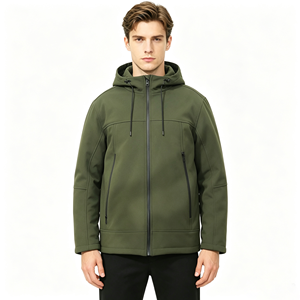
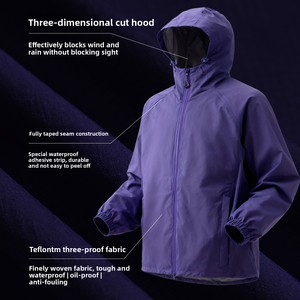
| Tactical Outdoor Shells | 3-Layer 75D/150D Ripstop Nylon / Polyester | 10,000mm – 20,000mm Hydrostatic Head (TPU Laminated) | Skiing, Hiking, Performance Techwear |
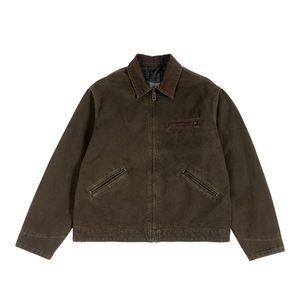
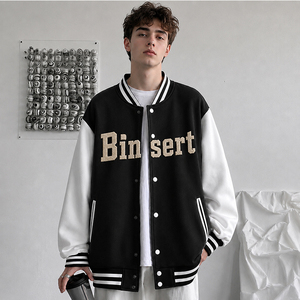
| Heavy Streetwear Cargo | 10oz - 14oz 100% Combed Cotton Duck Canvas | Enzyme & Stone Washed + C0 Eco-DWR Water Repellent | Urban Lifestyle, Vintage Streetwear Brands |
| Modular Lightweight Utility | 40D High-Tenacity Micro Ripstop Nylon | PFC-Free DWR, Windproof Cire Backing | Packable Running, Transitional Spring/Fall |
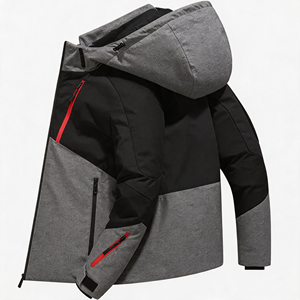
| Winter Insulated Cargo | Recycled 300T Taffeta or Cordura Matte Nylon | 600+ Fill Power Down or GRS-Certified Recycled Polyfill | Extreme Cold Climate, Expedition Outerwear |
The defining semantic feature of any cargo jacket is its pocket configuration. Sub-par factories often compromise on gusset construction and stress-point sewing. Our audited facilities follow rigorous construction guidelines:
Discover how shifting consumer expectations, regulatory compliance, and textile technology are reshaping OEM supply chains.
Future-proof outerwear demands multi-season versatility. Procurement buyers are shifting toward modular designs featuring detachable hoods, zip-off sleeves, and convertible thermal liners that lower inventory risk.
With EU anti-greenwashing directives and US state regulations, brands require fully certified recycled polyester (rPET) shell fabrics and PFC-free DWR coatings with verified Transaction Certificates (TC).
Enterprise workwear and tactical cargo lines are embedding anti-theft RFID-blocking pockets, integrated magnetic closures, and reflective high-visibility trim systems meeting ISO EN 20471 safety norms.
Traditional 2,000-piece minimums are being replaced by agile 100-300 piece starter runs on stock technical fabrics, enabling brands to test sell-through rates prior to committing full bulk capital.
By leveraging 3D CLO digital sampling, factories eliminate physical proto iterations, cutting pattern development windows down to 7 days while trimming sample material waste by up to 80%.
Global brands are utilizing dual-sourcing strategies across Asia, Europe, and the Americas to balance speed-to-market against duty optimization under GSP and regional free-trade frameworks.
From raw material inspection to final container sealing, every step is controlled under strict ISO 9001 and AQL 2.5 standard operating procedures.
Outerwear fails when minor details are left unmonitored. Our manufacturing process incorporates strict quality gates across every garment batch:
Expert answers to common questions asked by B2B apparel buyers, sourcing agents, and brand owners.
Our minimum order quantities (MOQs) are structured to accommodate growing private label brands as well as volume enterprise retailers. For styles utilizing in-stock mill fabrics (such as standard cotton canvas or stock nylon ripstop), MOQs begin at 100 to 200 pieces per style/colorway.
For custom mill-dyed PMS colors, proprietary jacquard linings, or specialized technical laminations requiring mill-level fabric runs, the base MOQ typically ranges between 300 to 500 pieces. We also provide sample prototyping protocols before bulk sign-off.
To receive an instant, itemized quotation, we recommend submitting a comprehensive Tech Pack or reference sample detailing:
If you lack a digital tech pack, our in-house pattern-making room can reverse-engineer your physical reference garment.
We provide full-package OEM/ODM private label production. Every component can be customized to showcase your unique brand identity:
Our standard production workflow operates on the following timeline:
Yes. Environmental compliance is central to our manufacturing operations. We offer Global Recycled Standard (GRS) certified recycled nylon and polyester fabrics derived from post-consumer PET bottles and ocean plastic waste.
Furthermore, our finishing partners utilize OEKO-TEX® Standard 100 certified non-toxic dyes, organic GOTS-certified cotton duck canvas, and C0 (fluorocarbon-free) durable water repellent coatings to ensure your outerwear aligns with global sustainability regulations.
Waterproof technical cargo jackets undergo rigorous hydrostatic pressure testing (measured in mm water column) before and after seam taping. Hot-air seam sealing machines apply thermoplastic tape across every needle hole to prevent moisture leakage.
Additionally, inline QA inspectors perform hourly checks on pocket alignment, stress-point bar-tacking strength, and zipper fluid motion against the sealed gold sample. A final AQL 2.5 visual report is issued before shipment clearance.