Industry Whitepaper & Technical Sourcing Manual
Top 10 ODM Apparel Manufacturer & Factory Sourcing Guide: Technical Engineering, Sustainable Textiles, and Global Supply Chain Optimization
The global apparel landscape has reached an inflection point. Contemporary garment brands, commercial distributors, and institutional procurement teams no longer view apparel manufacturers as simple cut-make-trim (CMT) vendors. In an era defined by rapid demand fluctuation, complex international customs frameworks, and stringent environmental disclosures, the strategic shift toward Original Design Manufacturing (ODM) has become mandatory for sustained brand profitability.
This whitepaper provides an exhaustive, industry-level benchmark for sourcing directors, brand founders, and apparel buyers seeking to partner with a top-tier ODM apparel manufacturer and factory. Drawing upon 16+ years of specialized outerwear production experience, we analyze the structural mechanics of ODM partnerships, fabric lamination science, zero-defect quality control systems, and future procurement trajectories for 2026 and beyond.
1. The Strategic Distinction: Why Top Brands Transition from OEM to ODM Manufacturing
While Traditional OEM (Original Equipment Manufacturing) places the burden of pattern drafting, fabric sourcing, marker planning, and technical specification entirely upon the brand, high-tier ODM factories function as integrated R&D centers. An established ODM apparel factory maintains a vast library of pre-tested, production-ready blocks—graded across global size charts from XS to 5XL—allowing buyers to collapse design timelines by up to 45%.
Key operational metrics when evaluating ODM vs. OEM apparel partners include:
- Standard Allowed Minutes (SAM) Optimization: Pre-graded ODM patterns undergo motion-study refinements to eliminate unnecessary seam joins, optimizing stitch count and labor efficiency without sacrificing ergonomic fit.
- Material Yield Efficiency: Modern CAD marker planning in an ODM setup maximizes fabric consumption efficiency to >88%, drastically reducing waste cost per cut piece.
- Speed-to-Market Prototyping: Utilizing digital pattern modification and extensive raw material in-stock programs, ODM prototyping yields proto samples within 7 to 12 business days compared to 6+ weeks in standard OEM development.
Technical Spotlight: Hydrostatic Head & Breathability Mapping in Technical Outerwear
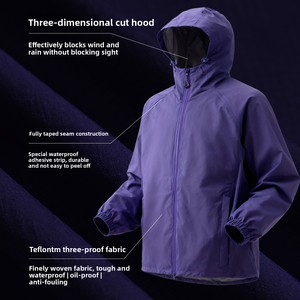
In high-performance outerwear—such as ski shells, windbreakers, and tactical winter parkas—fabric functionality relies on precise membrane lamination. Modern ODM factories utilize 3-layer (3L) and 2.5-layer (2.5L) hydrophobic polyurethane (PU) or polytetrafluoroethylene (PTFE) laminates capable of achieving 10,000mm to 20,000mm hydrostatic head ratings (ISO 811) paired with moisture vapor permeability (MVP) ratings of 10,000 g/m²/24h (JIS L 1099 B-1). Fully sealed seam taping using hot-air bonding prevents water ingress through needle punctures.
2. Future Procurement Trends: Sourcing Trajectories for 2026–2030
As regulatory authorities in the EU, North America, and APAC tighten mandates around textile circularity, global procurement strategies are undergoing structural evolution. Brands evaluating top ODM apparel manufacturers must align with four non-negotiable macro trends:
A. Closed-Loop Recycled Polymers & Documented GRS Traceability
Sourcing post-consumer recycled polyester (rPET) derived from ocean-bound PET bottles and reclaimed nylon-6 fishing nets is no longer optional. Leading ODM apparel factories enforce strict chain-of-custody documentation. Every batch of recycled fabric must be validated through Global Recycled Standard (GRS) or Recycled Claim Standard (RCS) Transaction Certificates (TC). This guarantees compliance with anti-greenwashing directives and customs auditing requirements in international markets.
B. PFC-Free Durable Water Repellent (DWR) Chemistry
Legacy water-repellent coatings relied on per- and polyfluoroalkyl substances (C8 and C6 fluorocarbon chemistries), which persist in ecological systems. Top-tier ODM factories have fully migrated to C0 (PFC-free) DWR finishes—utilizing plant-based branched polymers or bio-based silicones—that achieve Grade 4 to Grade 5 spray ratings (AATCC 22) while maintaining zero toxic chemical discharge.
C. 3D Digital Prototyping & Virtual Sampling
Integrating 3D CAD visualization tools (such as CLO3D and Browzwear) into the initial ODM tech pack workflow enables virtual fabric drape simulation, tension mapping, and real-time colorway iteration. This reduces physical sampling rounds from 4 down to 1 sealed Pre-Production (PP) sample, saving thousands of dollars in air courier fees and cutting months out of seasonal product rollouts.
D. Nearshore Supply Chain Resilience & Multi-Country Hub Production
Single-country sourcing models introduce severe vulnerability to tariff shifts, port congestion, and geopolitical disruptions. Enterprise-grade ODM manufacturers operate a diversified production matrix—combining administrative head offices (such as Oasis Jackets' Beverly Hills HQ) with multi-country manufacturing facilities spanning 9 nations across Asia and South America. This allows dynamic order allocation based on trade agreements (e.g., USMCA, GSP, EUR.1) to optimize landed duty costs.
3. Technical Evaluation Framework: How to Audit a Top-Tier ODM Apparel Factory
To ensure commercial reliability and brand protection, enterprise sourcing managers should execute a structured multi-point audit before issuing bulk Purchase Orders (POs). A top 10 ODM manufacturer must successfully pass four critical technical gateways:
-
Raw Material Quality Control (The 4-Point System):
Incoming fabric rolls must be inspected under standard light boxes according to ASTM D5430 (Standard Test Methods for Visually Inspecting and Grading Fabrics). Penalty points are assessed per 100 square yards; any roll exceeding 40 penalty points is rejected prior to cutting.
-
Inline Process Controls & Needle Detection:
Outerwear featuring synthetic polyfill insulation or down proofing requires continuous inline sewing audits. Completed garments pass through dual-head metal and needle detectors to eliminate broken needle hazards prior to polybagging.
-
Seam Strength & Hardware Pull Testing:
Zippers, snaps, drawcord locks, and silicone badges must undergo physical destruction testing. Snap fasteners must resist a minimum pull force of 90 Newtons (ASTM D7142), ensuring zero field failures during consumer usage.
-
Acceptable Quality Limit (AQL 2.5) Final Inspection:
Prior to container sealing, independent or internal QA teams execute final random sampling according to ISO 2859-1 (ANSI/ASQ Z1.4). Garments are audited for critical defects (zero tolerance), major defects (AQL 2.5), and minor defects (AQL 4.0).
4. Corporate Capability Overview: The Oasis Jackets Manufacturing Advantage
With over 16 years of specialized manufacturing history, Oasis Jackets (a premier division of Dioz Group) represents the pinnacle of international ODM and private label apparel production. Headquartered in Beverly Hills, California, our operational model bridges high-touch Western account management with direct factory-floor pricing control.
Our core operational infrastructure includes:
- Comprehensive Style Catalogue: Over 10,000 pre-developed blocks covering high-end leather coats, down puffers, varsity jackets, waterproof rain shells, polar fleece mid-layers, denim trucker jackets, and technical running shells.
- Global Footprint & Compliance: Facilities certified across ISO 9001, GRS, GOTS, OEKO-TEX Standard 100, Higg Index, and amfori BSCI, serving enterprise clients, government agencies (DOJ, FEMA), sports properties (FIFA, UFC), and corporate icons (Google, Amex).
- Low-Risk Order Structuring: Flexible MOQs tailored to support private label brand launches, complemented by robust high-volume production lines scaling to hundreds of thousands of units per quarter.
- End-to-End Private Label Engineering: Complete brand integration—including Pantone lab-dip matching, woven neck tags, FTC/EU compliant care labels, custom branded zipper pulls, silicone chest patches, and custom carton packaging.