Hi-Vis / Streetwear
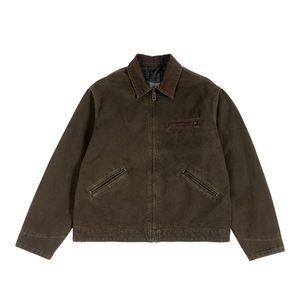
Custom Heavy-Duty Oversized Bomber Safety Workwear Jacket
300D Oxford Shell
Embroidery Ready
Thermal Lining

Customizable base blocks compliant with ANSI Class 2/3, EN ISO 20471, and CSA Z96 standards. Scalable from small-batch technical trials to full container loads.
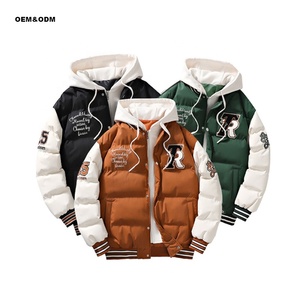
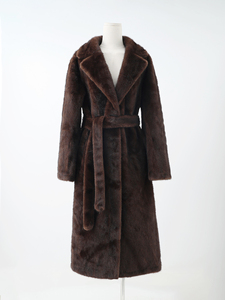
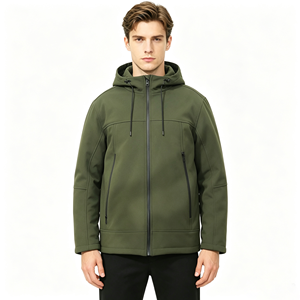
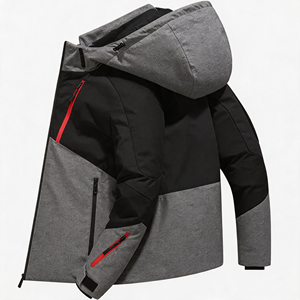

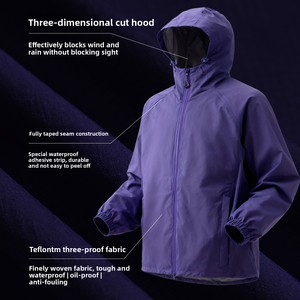
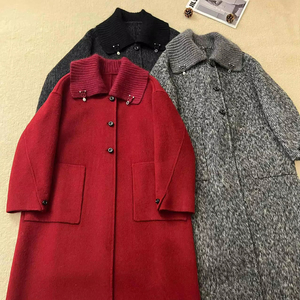
The global high-visibility and industrial safety outerwear market has evolved from transactional garment sewing into a highly regulated technical discipline. Contracting an OEM/ODM safety jacket manufacturer requires evaluating engineering precision, regulatory compliance, fabric lab-test transparency, and supply chain scalability. Oasis Jackets (a flagship manufacturing unit under the Dioz Group) brings over 16 years of direct garment manufacturing control, maintaining production facilities across 9 countries and serving B2B clients in more than 55 international destinations.
Critical Regulatory Compliance Note: Safety outerwear produced for North American, European, and Australian markets must comply with specific chromaticity coordinates and photometric retroreflective values. Our OEM facilities pre-certify raw fluorescent polymers under ANSI/ISEA 107-2020 (Classes 1, 2, and 3) and EN ISO 20471:2013+A1:2016 before pattern cutting begins.
Safety jacket performance rests on two fundamental pillars: background fluorescent fabric luminance and retroreflective tape photometric coefficients ($R_A$ values). As a full-service ODM partner, we source and manufacture engineered textiles that pass rigorous accelerated weathering tests.
Fluorescent Background Textiles: Background materials—typically 300D to 600D Oxford Polyester, 100% Nylon Ripstop, or Modacrylic blends—are dyed using highly specialized fluorescent yellow-green, orange-red, or red dyes. Our laboratory teams measure spectral reflectance curve data using spectrophotometers to verify compliance within defined color boxes under CIE 15 illuminate standards, even after 50 industrial laundry cycles.
Retroreflective Tape Technology: We incorporate both Microprismatic and Glass Bead retroreflective media (such as 3M™ Scotchlite™ or certified proprietary equivalents). For arc-flash and flame-retardant (FR) specifications, reflective materials are bonded to meta-aramid backing structures compliant with NFPA 2112 and ASTM F1506 standards.
Workwear outer shells intended for extreme environments must achieve superior hydrostatic resistance without sacrificing moisture vapor transmission rates (MVTR). We specialize in 2-layer and 3-layer laminated fabric constructions:
Full control over tech-pack conversion, material sourcing, compliance auditing, and global logistics execution.
Unlike rigid traditional factories requiring thousands of units per style, our agile production lines accommodate low MOQs per style and colorway. This allows start-ups and enterprise brands to test specialized seasonal SKUs with minimal inventory risk.
Every batch undergoes roll-by-roll 4-point fabric inspection, trim pull-testing, inline stitching checks, needle-detection scans, and final AQL 2.5 random sampling audits before container sealing.
From custom-moulded silicone badges, branded zipper pullers, and Pantone-matched shell dyes to compliant care labeling (US FTC & EU Textile Directives), your end product is 100% white-labeled under your brand identity.
We support corporate ESG mandates by providing Global Recycled Standard (GRS) rPET fabrics, GOTS organic cotton linings, and OEKO-TEX Standard 100 chemical safety certifications for all skin-contact trims.
Operating local corporate desk support in Beverly Hills (US), London (UK), Dubai (UAE), Riyadh (KSA), and Melbourne (AU), offering DDP (Delivered Duty Paid), FOB, or EXW terms tailored to your freight preferences.
Accelerate your go-to-market timeline. Our design engineering team converts flat sketches or competitor samples into 3D CAD digital fitting models and delivers physical proto samples in just 7 to 12 days.
How modern safety compliance, eco-regulations, and smart fabric tech are reshaping high-visibility purchasing decisions.
Global environmental legislation—including European REACH restrictions and US state-level bans on Per- and Polyfluoroalkyl Substances (PFAS)—is driving a total overhaul in Durable Water Repellent (DWR) surface treatments. Traditional C8 and C6 fluorocarbon DWRs are being replaced by bio-based silicones, plant-derived waxes, and branched polyurethane DWR finishes. As an ahead-of-the-curve ODM manufacturer, our factory lines exclusively utilize zero-PFAS hydrophobic coatings that maintain 80+ spray ratings after 20 washing cycles without releasing persistent bioaccumulative toxins.
Corporate ESG commitments require purchasing directors to document full supply chain traceability. Traditional high-visibility fabrics relied heavily on virgin petroleum-derived polyester to achieve bright chromaticity values. Recent dye chemistry breakthroughs now allow 100% Post-Consumer Recycled Polyester (rPET) derived from ocean-bound plastics and PET water bottles to achieve identical optical fluorescence. Every lot produced in our GRS-certified facilities comes accompanied by transaction certificates proving recycled origin from yarn spinning through final sewing.
Passive retroreflectivity relies entirely on external light sources (such as vehicle headlights). The industry is rapidly adopting active illumination technology, embedding flexible, low-voltage electroluminescent strips and active micro-LED arrays directly into softshell and parka structures. Powered by rechargeable lithium-polymer battery packs integrated into waterproof internal pockets, these smart safety jackets provide 360-degree illumination in total pitch-black environments even when no external light source shines on the worker.
Modern workwear buyers are replacing bulky single-purpose winter coats with versatile, modular 3-in-1 shell-and-liner systems. By pairing an ANSI Class 3 waterproof outer shell with a detachable, high-loft insulated inner jacket or fleece mid-layer, procurement departments lower lifetime gear expenditure. Furthermore, kinetic pattern drafting—incorporating gusseted underarms, articulated elbows, and dropped back hems—prevents jacket ride-up during overhead rigging and heavy machinery operation.
Our standardized 4-stage engineering protocol guarantees zero misinterpretation of your product specifications.
Submit your sketch, physical reference sample, or target price. Our merchandisers generate detailed bill-of-materials (BOM) and fabric options within 24 hours.
We cut patterns, dye lab-dips to your Pantone code, and deliver a proto sample. Once fit and trim are approved, a golden Pre-Production (PP) sample is sealed for bulk reference.
Automated CAD cutting, seam-sealing, and high-tensile stitching are monitored hourly. Inline quality audits ensure insulation and tape symmetry align with sealed standards.
Independent or in-house AQL 2.5 final inspection takes place. Cartons are ratio-packed, barcoded, and dispatched via sea, air, or rail under DDP/FOB terms.
Clear answers regarding OEM/ODM timelines, certifications, custom tooling, and order execution.
Our production lines engineer and manufacture outerwear fully compliant with international safety mandates, including ANSI/ISEA 107-2020 (Class 1, Class 2, Class 3), EN ISO 20471:2013 (European Union), CSA Z96 (Canada), and AS/NZS 1906.4 / 4602.1 (Australia/New Zealand). For flame-retardant (FR) workwear, we utilize fabrics tested under NFPA 2112, NFPA 70E (Arc Flash), and EN ISO 11612 standards.
We maintain flexible, buyer-friendly MOQs. For style designs utilizing available stock-supported technical fabrics with custom branding (embroidery, heat transfer, silicone badges), MOQs start as low as 100 to 300 pieces per style. For completely custom mill-dyed shell fabrics or engineered jacquard linings, MOQs typically start at 500 to 1,000 pieces per colorway depending on fabric mill thresholds.
We only use glass-bead and microprismatic reflective tapes pre-certified for coefficient of retroreflection ($R_A > 330 \text{ cd/lx}\cdot\text{m}^2$). During production, tape attachment is subjected to pneumatic heat-press temperature calibration or double-needle lockstitching. Samples from every batch undergo 25 to 50 home or industrial wash test cycles ($60^\circ\text{C}$ ISO 6330 standards) to verify zero tape peeling or retroreflective degradation.
Yes. We offer complete sustainable outerwear manufacturing programs utilizing Global Recycled Standard (GRS) certified 100% recycled polyester (rPET) shell fabrics, recycled thermal insulation, and PFC-free bio-based DWR finishes. Transaction Certificates (TCs) are provided for every completed shipment to support your corporate sustainability claims.
Initial pattern creation and physical proto samples take 7 to 12 working days. Once the golden pre-production sample is approved and lab-dips are signed off, bulk production takes approximately 25 to 45 calendar days depending on trim complexity and volume. Repeat re-orders on existing approved blocks move significantly faster.
All garments are inspected using strict AQL 2.5 standards (ANSI/ASQ Z1.4). We conduct raw material 4-point inspection, inline seam-sealing pressure tests, dimensional tolerance checks, and 100% metal/needle detection checks. Buyers are welcome to assign third-party inspection agencies (such as SGS, Intertek, or Bureau Veritas) prior to balance payment release.
Yes. Through our international network of corporate sales desks across the USA, UK, UAE, Saudi Arabia, Australia, Germany, and Brazil, we offer DDP (Delivered Duty Paid) shipping solutions. We handle export documentation, customs entry, tariff classification, and final door-to-door truck delivery directly to your warehouse hub.
Contact our technical merchandising team today. Receive custom tech-pack evaluations, fabric lab-dip swatches, and factory-direct price quotes within 24 hours.