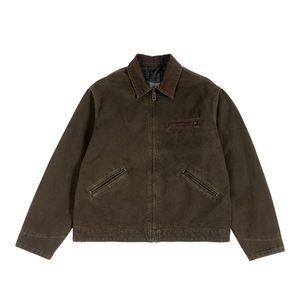
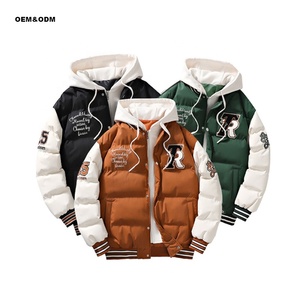
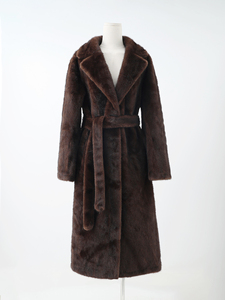
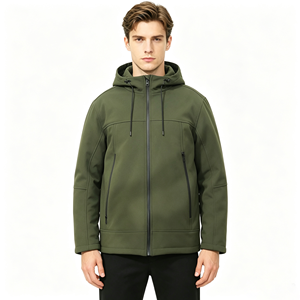
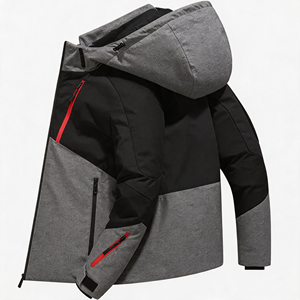
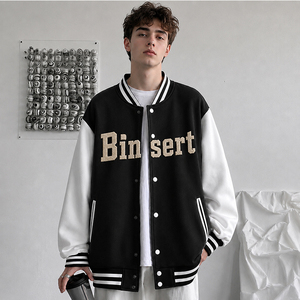
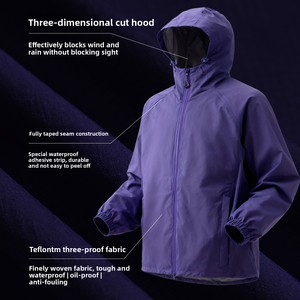
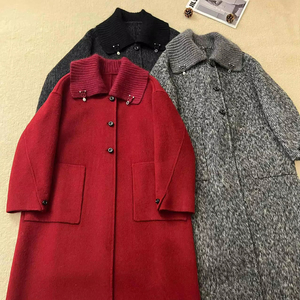
Custom engineered for industrial safety, extreme weather protection, corporate branding, and high-tenacity durability. Fully customizable from fabric specs to private label finishing.
In the modern global industrial economy, high-performance workwear jackets have evolved far beyond basic protective garments. Today’s commercial procurement officers, enterprise purchasing managers, and B2B brand buyers demand an intricate alignment of rigorous safety compliance, multi-climate thermal management, ergonomic mobility, and verifiable structural durability. As a premier original equipment manufacturer (OEM) and global exporter, Oasis Jackets integrates cutting-edge textile engineering into every production run, ensuring that heavy-duty workwear withstands extreme mechanical stress while meeting stringent international performance criteria.
Information Gain Key Insight: Workwear failure rarely stems from primary fabric degradation. Over 84% of commercial warranty claims in technical outerwear originate at seam stress points, zipper tape detachment, or microporous membrane delamination caused by improper thermal setting during volume assembly. Precision manufacturing mandates calibrated seam-sealing temperatures and stress-tested bartacking.
The primary defensive barrier of any professional workwear jacket lies in its shell material density and weave structure. OEM manufacturing utilizes high-density Duck Canvas (ranging from 10 oz to 14 oz), High-Tenacity Cordura® Nylon (500D to 1000D), and engineered polyester-cotton ripstop blends (such as 65% Polyester / 35% Cotton at 240–300 GSM). These substrates undergo specialized mechanical processing to deliver optimal tensile strength (ISO 13934-1) and tear resistance (ISO 13937-2), preventing punctures, abrasions, and structural tearing in industrial environments such as construction sites, logistics hubs, offshore oil platforms, and cold-storage facilities.
For outdoor workwear intended for harsh winter or marine environments, weatherproofing requires advanced lamination technology. Our OEM facility integrates 2-layer (2L) and 3-layer (3L) thermoplastic polyurethane (TPU) and polytetrafluoroethylene (PTFE) functional membranes. These micro-porous films allow water vapor molecules (sweat) to escape while preventing liquid water droplets from penetrating. Standard commercial specifications include hydrostatic head ratings between 10,000 mm to 20,000 mm (ISO 811 / AATCC 127) paired with Moisture Vapor Transmission Rates (MVTR) of 5,000 to 15,000 g/m²/24h (JIS L 1099 B1), providing full stormproof protection without sacrificing worker comfort.
| Workwear Category | Primary Shell Substrate | Hydrostatic Rating (mm) | Abrasion Resistance (Martindale) | Key Safety Compliance |
|---|---|---|---|---|
| Heavy Industrial Canvas | 100% Ring-Spun Cotton / Cordura 1000D | Water Repellent (DWR 80/20) | > 100,000 Rubs | EN ISO 13688 / ANSI/ISEA 107 |
| High-Vis Weatherproof Shell | 300D Oxford Polyester + TPU Lamination | 15,000 mm - 20,000 mm | > 50,000 Rubs | EN ISO 20471 Class 3 / ANSI Class 3 |
| Flame-Retardant (FR) Tactical | Nomex® / Treated Cotton-Nylon Blend | Hydrophobic Treated | > 75,000 Rubs | NFPA 2112 / EN ISO 11612 |
| Cold-Chain Insulated Parka | 40D Nylon Ripstop / 210T Taffeta Lining | 10,000 mm Waterproof | > 40,000 Rubs | EN 342 (Cold Environments) |

Analyzing the technological shifts shaping the next decade of commercial workwear production, smart textiles, and sustainable manufacturing standards.
Global enterprises are rapidly adopting Global Recycled Standard (GRS) certified rPET polyesters derived from post-consumer ocean plastics, alongside fluorocarbon-free (PFC-Free / PFAS-Free) Durable Water Repellent (DWR) surface finishes to meet strict EU REACH and US EPA environmental directives.
Next-generation OEM workwear incorporates flexible printed heater panels powered by low-voltage lithium battery banks, integrated passive RFID asset tracking chips for inventory control, and luminescent active LED piping for ultra-low-light worker safety.
Modern corporate fleets favor 3-in-1 modular outerwear systems featuring quick-interchange internal fleece/down mid-layers bonded to fully seam-taped technical storm shells via heavy-duty YKK system zips, lowering multi-season garment procurement costs.
A major breakthrough in workwear manufacturing is the shift from conventional lockstitch needle sewing to ultrasonic fabric welding and hot-melt seam-tape lamination. Traditional sewing creates thousands of needle punctures per garment, each presenting a potential leak site for water, oil, or hazardous chemicals. By deploying automated heat-sealing machinery operating at precise temperature profiles (200°C–350°C), OEM suppliers can achieve 100% impermeable seam seals that pass rigorous rain-room testing under ISO 1421 standards.
How global supply chain volatility, regulatory audits, and ESG compliance are transforming enterprise procurement strategies for workwear apparel.
Enterprise procurement executives are systematically moving away from single-country manufacturing reliance. The geopolitical landscape and maritime freight volatility have accelerated the adoption of "China+1" and multi-region production frameworks. As a global exporter operating production facilities across 9 countries, Oasis Jackets allows corporate buyers to balance cost efficiencies, tariff optimizations, and rapid regional transit times across North America, Europe, the Middle East, and Asia-Pacific.
Lead-time reduction is a core KPI for corporate procurement. The traditional physical sampling cycle (which historically took 6 to 10 weeks across multiple revisions) is being replaced by 3D CAD digital rendering and virtual fitting software. By generating accurate 3D stress-strain heatmaps directly from digital tech-packs, our pattern masters compress initial proto-sample approval timelines down to just 7 to 12 days, reducing total time-to-market by up to 40%.
Environmental, Social, and Governance (ESG) compliance is no longer optional for major retail chains and corporate workwear distributors. Modern buyers require full supply chain visibility from raw yarn spinning down to final garment assembly. Complete transaction certificates (TCs) for GRS, OEKO-TEX Standard 100, and Higg Index facility environmental audits are now baseline prerequisites for global contract awards. Enterprise procurement teams utilize these verified documents to shield their brands from greenwashing risks and compliance fines.
Leveraging 16+ years of specialized outerwear production experience to serve brands, corporate accounts, and distributors in over 55 countries.
Every bulk production run undergoes rigorous inline and final AQL 2.5 statistical sampling inspection. Fabrics are pre-tested for color fastness, shrinkage, and tear resistance prior to cutting.
From custom logo embroidery, screen printing, and silicone badges to bespoke YKK pullers, branded neck labels, and FTC-compliant care tags, we deliver complete turn-key OEM products.
You work with a single dedicated account specialist from initial tech-pack analysis through lab-dip approvals, proto-sampling, bulk assembly, and DDP/FOB logistics dispatch.
Comprehensive answers to common technical, commercial, and operational questions regarding bulk custom workwear jacket sourcing.
For heavy industrial environments, we recommend high-density cotton duck canvas (12 oz–14 oz) or Cordura® nylon blends (500D/1000D) treated with DWR. For weatherproof shells, 300D polyester Oxford laminated with a TPU membrane (10,000mm+ waterproof rating) provides optimal protection against tear, abrasion, and fluid penetration.
Our minimum order quantities are structured flexibly based on raw material availability. For styles utilizing in-stock technical fabrics with custom logo branding and hardware, MOQs start low per style/colorway. For custom mill-dyed pantone fabrics or specialized technical laminations, MOQs align with mill minimums. Contact our sales team for exact project quotes.
Pattern development and initial proto-sampling typically take 7 to 12 business days upon receiving your tech-pack or reference sample. Following fit sample and pre-production (PP) sample approval, bulk production requires 25 to 45 days, depending on total volume, trim complexity, and mill fabric availability.
Yes. Private label manufacturing is our core specialty. We provide complete customization, including woven neck labels, care content tags compliant with US FTC and EU regulations, custom branded zipper tape/pullers, embossed leather patches, silicone sleeve badges, 3D embroidery, reflective heat transfers, and custom branded polybags or carton packaging.
We supply verifiable certifications based on your program requirements, including GRS (Global Recycled Standard), OEKO-TEX Standard 100, GOTS for organic cottons, ISO 9001 quality management, amfori BSCI social audit reports, and IDFL certificates for ethically sourced down insulation.
We ship to over 55 countries across North America, Europe, the Middle East, South America, and Australia. We support all standard commercial shipping terms, including DDP (Delivered Duty Paid), FOB (Free on Board), EXW (Ex Works), and CIF, partnering with global logistics providers for sea, air, and express freight delivery.
All production follows strict ISO quality control protocols. Incoming fabrics pass 4-point visual inspection and lab testing. Inline assembly undergoes hourly seam and symmetry audits, while finished orders undergo final AQL 2.5 statistical sampling inspection, needle detection, and carton drop testing prior to release.
Partner with an experienced global OEM jacket manufacturer. Send us your tech packs, physical reference garments, or target cost requirements today to receive a comprehensive factory-direct quote within 24 hours.
Send an Inquiry