Custom OEM Sustainable Outerwear Factory & Exporters

Global Leader in Certified Recycled Outerwear Manufacturing, Technical Shell Engineering, and Private Label OEM Solutions for International Fashion Brands.

Factory Catalog

Featured Wholesale Outerwear Collections

Precision-crafted technical jackets, insulated coats, and sustainable streetwear manufactured with recycled materials and custom branding capabilities.

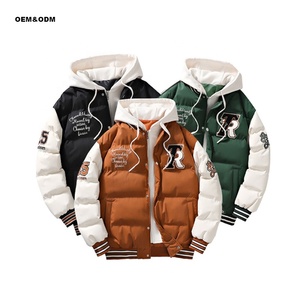
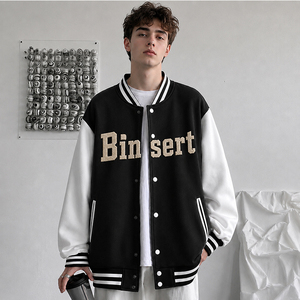
Vintage OEM Wholesale Streetwear Custom Embroidered Oversized Bomber Jacket

Custom Designer Vintage Winter Embroidered Oversized Bomber Jacket

Inquire Now
Casual Performance Wholesale Men Autumn Winter Warm Hooded Baseball Bomber Jacket

Wholesale Men's Autumn & Winter Warm Hooded Baseball Bomber Jacket

Inquire Now
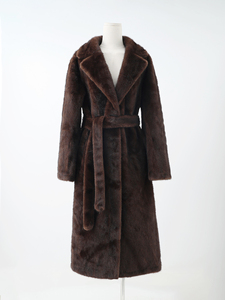
Luxury Outerwear Custom Solid Color Faux Fur Coat Women Belted Waist Winter Luxury

Minimalist Long Pile Faux Fur Women's Belted Winter Luxury Coat

Inquire Now
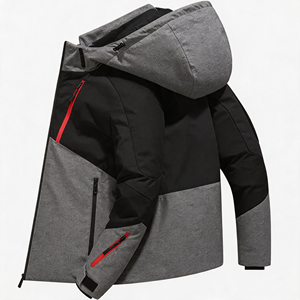
Technical Ski Men Winter Waterproof Windproof Fleece Jacket Ski Snow Coat

Men's Winter Waterproof Windproof Thick Outdoor Ski Snow Fleece Jacket

Inquire Now
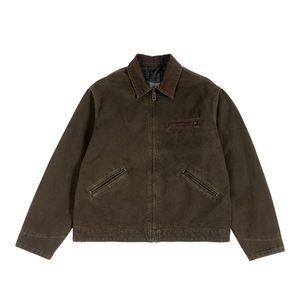
Eco Canvas Custom Logo Streetwear Men Canvas Waterproof Eco Friendly Jacket

Eco-Friendly Waterproof Breathable Men's Canvas Winter Jacket

Inquire Now
Low MOQ Batch Wholesale Custom Varsity Jacket Baseball Coat Chenille Embroidery

Custom Varsity Baseball Jacket with Chenille Embroidery & Leather Sleeves

Inquire Now
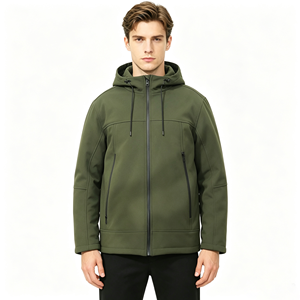
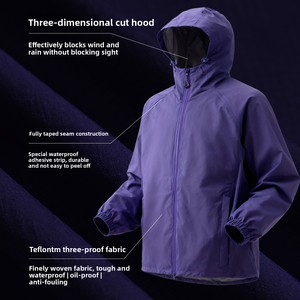
Quiet Luxury Quiet Luxury Men Casual Jacket Waterproof Storm Coat Designer

Quiet Luxury Men's Waterproof Storm Coat & Windproof Designer Shell

Inquire Now
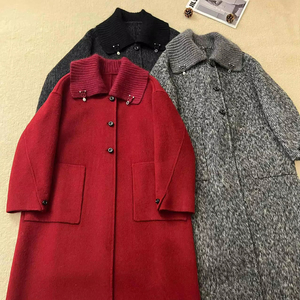
Custom Tailored Wholesale Clothing Customized Women Winter Warm Overcoat Woolen

Customized Women's Winter Warm Knee-Length Tailored Woolen Overcoat

Inquire Now
Global Infrastructure

Enterprise OEM Outerwear Manufacturing Capabilities

Headquartered in Beverly Hills with production operations across 9 countries, delivering factory-direct scale, transparent ESG compliance, and flexible low-MOQ programs.

16+
Years Industry Authority
55+
Countries Exported
9
Production Countries
5,000+
Global B2B Partners
Global Recycled Standard (GRS) OEKO-TEX Standard 100 GOTS Organic Certified ISO 9001 Quality System amfori BSCI Audited Higg Index Assessed

Technical Whitepaper: Engineering Next-Generation Sustainable Outerwear

In the modern commercial outerwear ecosystem, sourcing managers face a critical imperative: reconciling high-performance technical requirements (hydrostatic water column resistance, thermal insulation efficiency, and mechanical durability) with aggressive global ESG mandates. As a premier Custom OEM Sustainable Outerwear Factory, our production methodology integrates advanced circular material science with digitalized manufacturing workflows to eliminate performance trade-offs in eco-friendly garment production.

Information Gain Insight: Modern sustainable outerwear manufacturing requires moving beyond simple recycled polyester (rPET) face fabrics. True technical sustainability involves multi-layer membrane lamination using bio-based TPU membranes, fluorine-free C0 DWR (Durable Water Repellent) surface treatments, and fully traceable closed-loop supply chains validated by GRS transaction certificates.

Our engineering matrix evaluates fabric performance across three critical mechanical parameters: water tightness under dynamic pressure (measured in mm H2O), moisture vapor transmission rate (MVTR measured in g/m²/24h), and thermal resistance to weight ratio (CLO values). By standardizing these metrics across our 9 international manufacturing facilities, we ensure that private label brands achieve precise consumer performance targets regardless of order scale or manufacturing location.

Weatherproof Shell Membranes

  • Hydrostatic Head Rating 10,000 mm – 20,000 mm
  • Breathability Rating (RET) < 6 RET (High)
  • Membrane Polymer Recycled / Bio-TPU
  • Seam Sealing Tape 3-Layer Hot Melt PU

Eco Insulation Metrics

  • Responsible Down Standard 600 – 800 Fill Power
  • rPET Synthetic Insulation 60 – 200 GSM
  • Thermal Efficiency Index CLO 1.2 – 3.8
  • Down-Proof Fabric Density 20D / 380T Ripstop

Finishing & Hardware

  • Water Repellency PFC-Free C0 DWR
  • Zipper Performance YKK / SBS Recycled
  • Fabric Tensile Strength > 450 N (ASTM D5034)
  • Color Fastness to Light Grade 4.5 (AATCC 16)

From custom streetwear bombers with intricate chenille embroidery to alpine-grade 3-layer laminated ski shells, our OEM factory floor utilizes computer-controlled CAD pattern nesting to minimize cutting room fabric waste to under 8%. Every garment lot undergoes rigorous pre-production proto testing, fit approvals, and sealed sample matching prior to bulk line loading.

Strategic Foresight

Future Outerwear Procurement & Sourcing Trends

Navigating regulatory evolution, carbon neutral supply chains, and digital product traceability in the global outerwear sector.

1. Mandatory Digital Product Passports (DPP) & EU Eco-Design Regulations

As the European Union implements its Ecodesign for Sustainable Products Regulation (ESPR), global outerwear brands must prepare for total supply chain transparency by 2026. Future procurement strategies require OEM suppliers to provide item-level data including raw material origin, chemical compliance (REACH), carbon footprint metrics, and end-of-life recyclability instructions. Our factory network is fully integrated with digital supply chain tracking, issuing audited transaction documentation for every production batch.

2. Nearshoring + Multi-Country Manufacturing Agility

Geopolitical friction and shipping channel vulnerabilities have exposed the risks of single-region manufacturing reliance. The future of outerwear sourcing lies in a dual-track hub model: maintaining core high-volume production in cost-effective Asian apparel hubs while utilizing regional nearshore facilities for rapid replenishment cycles. Operating active manufacturing units in 9 countries allows our clients to dynamically re-route production based on regional tariff shifts, capacity availability, and localized market demand.

3. Transition to Mono-Material Circular Outerwear

Traditional jackets combine nylon shells, polyester linings, polyurethane coatings, and mixed-metal zippers—creating significant barriers to post-consumer textile recycling. Sourcing leads are aggressively pivoting toward mono-material garment design (where shell, lining, insulation, thread, and webbing are engineered entirely from 100% recycled Polyester/PET). This structural shift enables true garment-to-garment chemical recycling without manual hardware decomposition.

Knowledge Base

Outerwear Procurement & OEM FAQ

Direct answers to crucial technical, financial, and logistical questions asked by B2B sourcing directors and apparel buyers.

What technical specifications are critical for verifying waterproof & breathable outerwear quality?

Evaluating technical outerwear performance requires assessing three core laboratory benchmarks: Hydrostatic Head Pressure (JIS L 1092 / AATCC 127), Moisture Vapor Transmission Rate (ASTM E96 / JIS L 1099), and Seam Tape Adhesion Strength. Premium ski and rain outerwear typically requires a minimum 10,000 mm water column rating (with 20,000 mm specified for extreme alpine conditions) paired with a breathability rating of 10,000 g/m²/24h or lower RET rating (< 6). Additionally, inspecting seam tape seal Integrity under hydrostatic pressure testing ensures zero water ingress at needle puncture points.

How does your factory accommodate low MOQ requirements for startup private label brands?

We solve the traditional high-MOQ barrier by maintaining an active raw material bank containing over 10,000 pre-developed outer shell blocks, stock-dyed technical fabrics (such as 20D ripstop nylon, 300T polyfill lining, and 300 GSM polar fleece), and standardized trim inventories. For emerging brands, utilizing stock-backed fabric lines enables production minimums as low as 100–300 pieces per style/colorway. For custom-milled fabrics or custom Pantone lab-dip dye runs, minimums scale to standard mill requirements (typically 1,000 meters per shade).

What is the standard production timeline from tech pack approval to sea shipment?

A standard OEM outerwear manufacturing schedule follows a structured 4-phase timeline: Phase 1: Pattern creation, grading, and initial proto sampling (7–12 business days). Phase 2: Tech pack refinement, lab-dip color matching, trim approval, and sealed Pre-Production (PP) sample sign-off (7–10 days). Phase 3: Bulk fabric weaving, lamination, cutting, line-sewing, inline seam taping, pressing, thread trimming, and metal detection (25–45 days depending on complexity). Phase 4: Final AQL 2.5 random quality inspection, packaging, and vessel loading (3–5 days). Total estimated factory lead time averages 45–60 days.

Which sustainability certifications support your eco-friendly jacket manufacturing claims?

All eco-friendly fabric, insulation, and hardware sourcing is backed by third-party audit documentation. Our recycled polyester (rPET) and regenerated nylon programs carry Global Recycled Standard (GRS) and Recycled Claim Standard (RCS) Transaction Certificates (TCs). Natural cotton flannels and linings adhere to Global Organic Textile Standard (GOTS). Down filling is 100% Responsible Down Standard (RDS) certified and verified by IDFL. Chemical safety across all dyed textiles complies with OEKO-TEX Standard 100 Class I/II regulations, ensuring complete freedom from harmful PFCs, heavy metals, and phthalates.

Can your factory execute full private label customization including custom hardware and trims?

Yes, comprehensive private label manufacturing is our core enterprise specialty. We manufacture custom woven neck labels, FTC/EU-compliant care content labels, embossed leather or silicone arm badges, branded metal snaps, custom laser-etched zipper pullers, rubberized cord adjusters, printed interior lining linings, and custom barcode hangtags. Your production run remains 100% white-label with zero factory branding visible on garments or export packaging.

What quality control (QC) procedures are implemented to prevent defects in bulk outerwear manufacturing?

Our quality assurance framework is governed by a 4-Stage Inspection Standard. First, raw fabric undergoes 4-point inspection upon mill arrival for tensile strength, shade variation, and surface defects. Second, during inline sewing, dedicated QC auditors inspect needle tension, seam tape temperature adhesion, and insulation grammage consistency hourly. Third, 100% of finished garments undergo metal needle detection, thread trimming, and steam pressing. Fourth, final pre-shipment audits adhere strictly to ISO 2859-1 (ANSI/ASQC Z1.4) AQL 2.5 Major / 4.0 Minor acceptance thresholds. Third-party inspection reports from SGS, Intertek, or Bureau Veritas are fully supported.

Scale Your Outerwear Line With a Certified OEM Partner

Connect directly with our senior merchandising engineers in Beverly Hills, London, or Dubai. Receive tech pack evaluations, fabric swatch kits, and factory-direct price quotes within 24 hours.

Request Factory Quote & Tech Consultation