
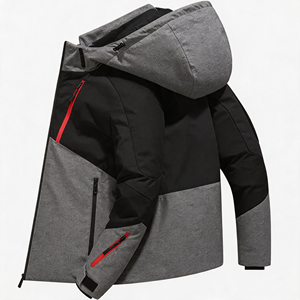
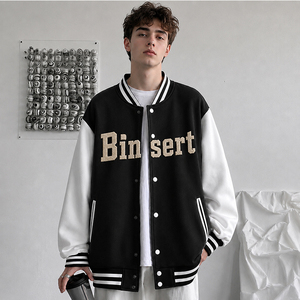
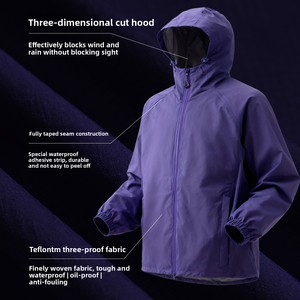
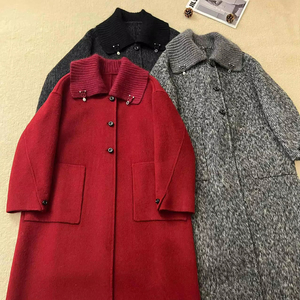
Industry Whitepaper: The Strategic Evolution of Children’s Jackets Sourcing & Export Dynamics
Sourcing children's outerwear on a global scale demands an intricate balance between stringent safety protocols, high-performance textile engineering, sustainable raw material traceability, and agile supply chain management. As a leading China-based children's jackets supplier and international exporter, our manufacturing infrastructure is purpose-built to address the technical complexities inherent in kids' garment production. Unlike adult fashion, kids' apparel operates under intense regulatory oversight where physical safety, chemical non-toxicity, thermal comfort, and durability are non-negotiable parameters.
Over the past decade, global procurement strategies have shifted dramatically. B2B buyers—ranging from specialized kidswear chains in North America and Western Europe to corporate brands in the Middle East and Australia—no longer choose suppliers based purely on FOB prices. Instead, market entry requires comprehensive E-E-A-T capabilities: verified technical expertise, transparent compliance documentation (such as OEKO-TEX Standard 100 Class I and GRS certifications), robust quality control (AQL 2.5 standards), and versatile OEM/ODM customization options.
Key Insight for Outerwear Buyers & Importers
Children’s apparel requires specialized pattern engineering. Children possess higher surface-area-to-body-mass ratios than adults, rendering them more susceptible to rapid thermal loss. Simultaneously, active physical movement requires tear-resistant fabrics, reinforced stress points, and safety-engineered closures free from hazardous drawstrings or pinch-prone hardware.
Future Procurement Trends in Children’s Outerwear Manufacturing (2025–2030)
To assist global procurement officers, apparel brand directors, and wholesale importers in future-proofing their seasonal inventory, our product development team has outlined four foundational macro-trends currently restructuring the global children's jackets export landscape.
1. Transition to Eco-Friendly & PFAS-Free Waterproofing
Global environmental mandates (such as EU REACH restrictions and US state-level PFAS bans) are driving the phase-out of traditional C8 fluorocarbon DWR finishes. Future-ready manufacturers utilize fluorine-free C0 DWR coatings paired with GRS-certified recycled polyester (rPET) shells derived from post-consumer waste, drastically reducing carbon footprints while maintaining 10,000mm hydrostatic head performance.
2. Strict Safety Standardization (EN 14682 & CPSIA)
Safety compliance is the most vital metric in kids' outerwear export. Major global markets strictly enforce regulations regarding drawstrings and cords (EN 14682 in Europe, ASTM F1816 in the US) to eliminate strangulation risks. Leading exporters implement fixed internal elastic toggles, breakaway hood snaps, chin-guards over zippers, and zero small detachable parts that pose choking hazards.
3. All-Weather Versatility & Modular 3-in-1 Designs
Parents and retailers increasingly favor multi-functional apparel. Procurement volumes for 3-in-1 detachable systems—combining a waterproof, windproof outer shell with a removable thermal fleece or lightweight puffer mid-layer—continue to outpace single-purpose coats. Integrated growth-fit sleeve systems (extendable cuffs) also lengthen product lifespans.
Comprehensive B2B Quality Control Framework: Tech-Pack to Container
A major vulnerability in cross-border garment manufacturing is sample-to-production variance. As an experienced China exporter, Oasis Jackets mitigates operational risk through a rigorous 5-stage quality assurance protocol integrated into every production line:
- Raw Material & Fabric Roll 4-Point Inspection: Every batch of incoming woven shell, fleece lining, and insulation fill undergoes automated 4-point fabric inspection. We test tensile strength, color fastness to light/rubbing, pilling resistance, and hydrostatic head ratings before cutting.
- Lab Dip & Trim Hardware Compliance Audit: Color matching is executed under standardized D65 light boxes using Pantone references. Zipper pulls, snap buttons, and velcro closures are pull-tested (exceeding 70N force requirements) to prevent detachment.
- Sealed Pre-Production (PP) Sample Sign-Off: No bulk order enters production without a sealed PP sample approved by the client’s tech team. This sample serves as the golden standard for inline checking.
- Inline SAM (Standard Allowed Minutes) & Seam Sealing Monitoring: For technical jackets, high-temperature hot-air seam sealing machines are monitored hourly to verify zero water leakage under continuous pressure tests.
- Needle Detection & AQL 2.5 Final Inspection: Every finished garment passes through 100% metal and needle detectors to safeguard end-user security, followed by a final random AQL 2.5 quality audit prior to carton sealing.
OEM/ODM Customization & Supply Chain Flexibility
Recognizing that emerging private label brands and regional distributors face working capital constraints, our manufacturing lines offer adaptable MOQ structures. Stock-fabric programs allow low entry thresholds for market testing, while fully custom mill-dyed programs accommodate large-scale retail replenishment cycles with volume economics.
From tech-pack development, CAD marker efficiency optimization, custom woven neck labeling, care content tags compliant with US FTC/EU rules, custom zipper pulls, to barcode-labeled master cartons—our one-stop OEM/ODM service guarantees seamless market readiness upon arrival at destination ports.