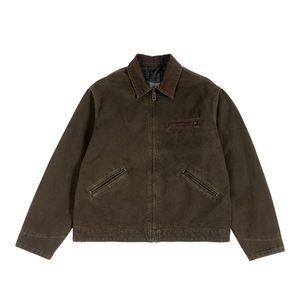
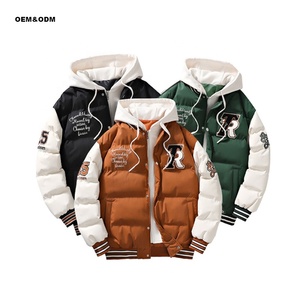
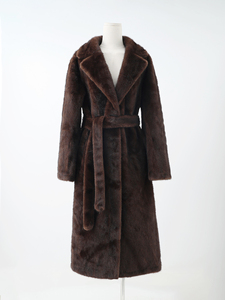
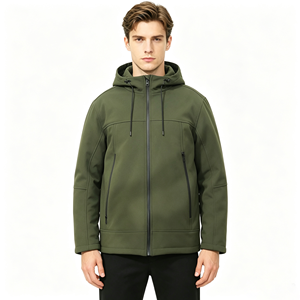
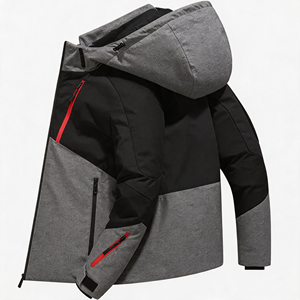
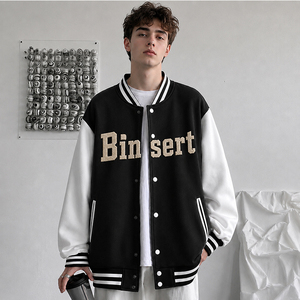
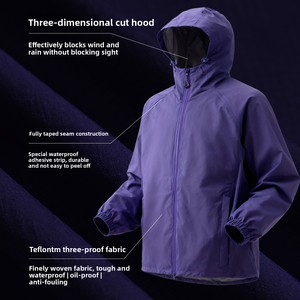
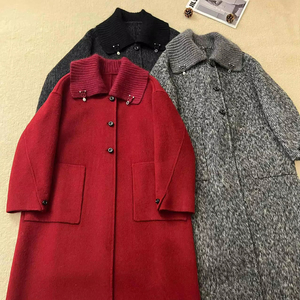
Pre-graded, performance-tested OEM/ODM jacket silhouettes ready for custom private-label branding, custom fabric specifications, and global bulk export.
Analyzing supply chain integration, technical fabric innovation, and risk-mitigated B2B apparel manufacturing protocols.
In the global garment trade, securing a top-tier China bulk outerwear exporter is the single most critical decision for brand owners, institutional procurement officers, and high-volume apparel distributors. Outerwear manufacturing—spanning technical ski jackets, heavy down parkas, seam-sealed rain shells, tailored woolen overcoats, and streetwear bombers—represents the most complex vertical in apparel production. Unlike basic circular-knit items like t-shirts or hoodies, technical outerwear requires hyper-specialized machinery, intricate pattern-grading, multi-component supply chain synchronization, and stringent weatherproofing validation protocols.
China's dominance as the premier outerwear exporting hub stems from its unprecedented textile industrial clusters. Facilities located across key provinces such as Zhejiang, Jiangsu, Guangdong, and Fujian sit directly within a 50-kilometer radius of world-class weaving mills, specialized dye houses, zipper manufacturers (such as YKK and high-spec custom metal hardware suppliers), down-filling processing plants, and lamination specialists. This geographic concentration minimizes material transit lead-times, allows rapid lab-dip shade matching (within 3 to 5 business days), and drastically reduces supply chain vulnerability during peak Q3/Q4 production surges.
High-performance outerwear demands machinery far beyond standard lockstitch sewing units. Leading Chinese export manufacturers utilize state-of-the-art automated cutting systems (Gerber/Lectra CAD pattern grading), laser-perforation machinery for breathability zones, high-frequency ultrasonic welding units for stitchless baffle down jackets, and hot-air seam-sealing machines designed for 3-layer waterproof membranes. These technological assets ensure that every single garment exiting the assembly line meets strict tolerance thresholds, eliminating human error in critical stress zones such as armhole joints, pocket welts, and storm flap closures.
Every bulk shipment undergoes raw material 4-point inspection, inline SAM timing checks, and final AQL 2.5 statistical audits before packing.
Certified production environments complying with GRS, GOTS, ISO9001, OEKO-TEX, and amfori BSCI social compliance auditing standards.
Support for emerging brands through modest initial minimum order quantities, scaling up seamlessly to 100,000+ unit seasonal container runs.
Seamless customs clearance, tariff advisory (HS Code 6201/6202 optimization), and door-to-door delivery across North America, Europe, and APAC.

Key market shifts redefining bulk outerwear procurement for international retail chains, private labels, and corporate buyers over the next decade.
Global regulatory mandates—such as the EU Corporate Sustainability Due Diligence Directive (CSDDD) and expanded producer responsibility (EPR) apparel laws—are shifting the outerwear industry toward mono-material engineering. Historically, jackets blended polyester shells with nylon linings and mixed polyurethane coatings, creating an impossible barrier for mechanical recycling. The future of bulk outerwear lies in 100% Polyester or 100% Polyamide (Nylon 6) single-polymer constructions where the shell, membrane, thread, zipper tape, and insulation can be shredded and re-extruded into pristine new filament yarns without disassembly.
Environmental standards have permanently banned C8 and C6 perfluorinated compounds (PFAS) due to bioaccumulation risks. Leading outerwear manufacturers in China have successfully transitioned bulk production to eco-conscious C0 DWR technologies based on plant-derived waxes, silicone polymers, and hyper-branched dendrimers. Modern C0 finishes achieve up to 90–100 points on the initial spray test (AATCC 22) while maintaining softness and eco-compliance across repeated industrial laundering cycles.
Consumers are demanding lighter garments with higher CLO values (thermal resistance units). Sourcing trends demonstrate a rapid pivot away from heavy, bulky synthetic wadding toward intelligent insulation systems. These include graphene-infused polyester fiberfills, recycled down blends treated with hydrophobic nanocoatings, and phase-change material (PCM) linings that store surplus body heat during active motion and release it when stationary.
Traditional outerwear development involved 3 to 4 iterative sample rounds, consuming weeks of lead time and generating wasteful prototype discard. Premier Chinese OEM export factories now utilize CLO3D and Browzwear software to simulate fabric drape, tension maps, down baffle volume, and zipper movement in high-fidelity 3D before a single meter of fabric is cut. This reduces proto-approval cycles from 30 days down to under 7 days, slashing time-to-market by up to 40%.
Use this matrix to align target market functional requirements with factory-level fabric specifications:
| Category | Shell Fabric Specification | Waterproof / MVTR Rating | Insulation / Lining System | Recommended Stitching & Seam Tech |
|---|---|---|---|---|
| Extreme Outdoor & Ski | 3-Layer Laminated 75D Polyester / Cordura Ripstop | 15,000mm – 20,000mm / 15,000g/m²/24h | 700+ Fill Power RDS Down or 120GSM Primaloft | 100% Fully Taped Hot-Air PU Tape Seams |
| Urban Tactical & Workwear | Heavyweight Cotton Canvas (300-450GSM) / DWR | 3,000mm – 5,000mm Water Repellent | 300GSM Anti-Pill Heavy Polar Fleece / Quilted Satin | Triple-Needle Chainstitch at Major Stress Joints |
| Luxury Streetwear & Bombers | Memory Silk Nylon / Lambskin Nappa / Melton Wool | DWR Water-Resistant Finish | High-Density Viscose Satin / Custom Embossed Jacquard | Precision Single-Needle Stitching & Heavy YKK Metal Hardware |
| Packable Windbreakers | 20D / 40D Ultra-Light Micro Ripstop Nylon | 10,000mm Breathable Windproof Coating | Unlined or Lightweight Breathable Mesh | Elastic Bound Edge Binding & Self-Stowing Pocket Bag |
Addressing essential technical, operational, and commercial questions for global apparel sourcing directors.
MOQ varies depending on fabric customisation requirements. For garments utilizing in-stock factory fabrics with custom branding (embroidery, printing, hardware patches), MOQs start as low as 100 to 200 pieces per style/colourway. For custom mill-dyed fabric colors, custom jacquard patterns, or technical 3-layer laminated membranes, minimums typically sit between 500 and 1,000 pieces due to textile mill weaving and dyeing vessel constraints.
Every incoming fabric lot undergoes rigorous lab testing prior to cutting. Waterproofing is evaluated using Hydrostatic Head Pressure testers (ISO 811 standard), while breathability is verified via Moisture Vapor Transmission Rate (MVTR - JIS L1099 method). Furthermore, fully sealed prototype garments are tested in rain tower chambers to check for seam leakage under real-world precipitation pressure.
The standard development timeline includes: 3–5 days for digital 3D pattern development, 7–12 days for physical proto sampling, and 5–7 days for fit adjustments. Once the sealed Pre-Production (PP) sample is approved, bulk manufacturing requires 30 to 45 calendar days depending on trim complexity. Air freight shipping takes 5–9 days, while sea freight ranges from 20 to 40 days depending on the destination port (FOB, CIF, or DDP terms).
Yes. We provide complete private-label OEM services. This includes woven neck labels, care/content labels compliant with US FTC rules (RN tracking, fiber composition, country of origin) and EU Directive 1007/2011, custom hangtags, branded zipper pullers, silicone badges, and custom polybags. No supplier branding appears anywhere on your finished product or shipping packaging.
Our partner factories operate under international compliance standards including ISO 9001 (Quality Management), amfori BSCI, and SMETA (SEDEX) social audits. For sustainable fabric lines, we supply official GRS (Global Recycled Standard), GOTS (Organic Cotton), OEKO-TEX Standard 100, and RDS (Responsible Down Standard) Transaction Certificates (TCs) for every shipment.
We utilize automated digital down-filling injection machines that weigh down cluster charges to within 0.1-gram accuracy per baffle channel. Shell fabrics are lined with high-density anti-down leak linings (down-proof calendering finish, minimum 300T/400T density) and sewn with specialized anti-friction needles and core-spun threads to eliminate down migrating through needle holes.
We accommodate all standard Incoterms 2020 including EXW (Ex Works), FOB (Free on Board Shanghai/Ningbo/Shenzhen), CIF (Cost, Insurance, and Freight), and DDP (Delivered Duty Paid). Under DDP terms, our logistics team manages all export customs filing, international sea/air freight, import customs duty clearance, and final truck delivery directly to your distribution center.
All production is bound by the physical sealed Pre-Production (PP) sample and signed spec sheet. Every shipment undergoes final AQL 2.5 inspection. If any batch fails to meet approved tolerances upon arrival, our quality assurance team investigates via lot retention samples. Verified defects are fully covered under our factory guarantee through credit notes, expedited remanufacturing, or direct replacement.
Elevate your next apparel collection with engineered weatherproofing, custom technical trims, and factory-direct pricing. Contact our senior merchandising engineering team today for immediate tech-pack evaluation and instant quotation.