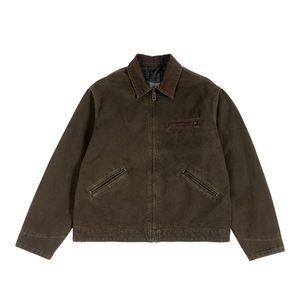
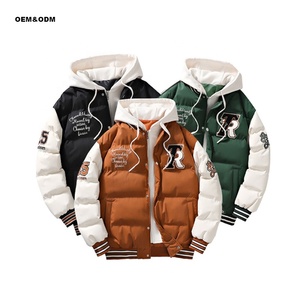
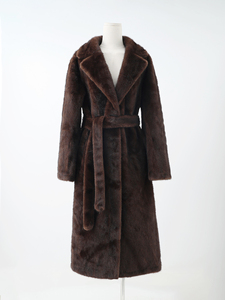
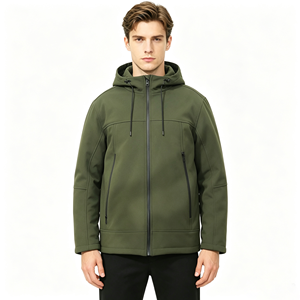
10,000+ Existing Base Blocks
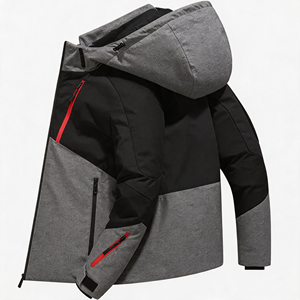
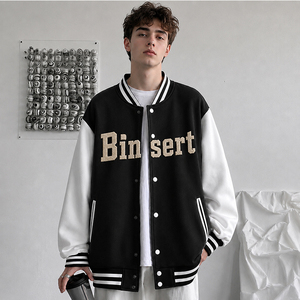
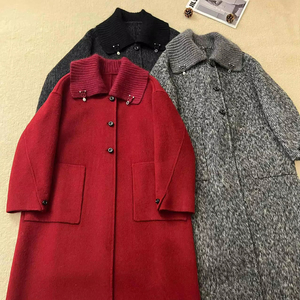
Shorten time-to-market by up to 40% utilizing our extensive library of verified fits, including technical alpine shells, insulated parkas, vintage bombers, and structured wool coats.
AQL 2.5 Quality Assurance
Every garment lot undergoes 4-point raw material inspection, hourly inline inline stitch audits, zipper stress testing, and final AQL 2.5 defect audits prior to carton sealing.
GRS & OEKO-TEX Compliance
Fully compliant sustainable supply chain options featuring recycled polyester (rPET), GOTS certified organic cottons, PFC-free DWR finishes, and IDFL certified responsible down.
China Men's Outerwear Manufacturing Report & Sourcing Whitepaper
Sourcing men's outerwear at scale requires balancing technical performance, material compliance, cost-efficiency, and supply chain speed. Unlike simplified apparel categories, an outerwear piece comprises multiple component systems: technical face fabrics, functional breathable membranes, insulation layers, custom hardware, and specialized seam sealing. As a premier China best mens jackets manufacturer & supplier, Oasis Jackets operates across the nexus of advanced textile technology and high-volume garment construction.
Executive Summary: The global men's outerwear market is undergoing a structural shift toward technical hybrid styles—garments that blend city aesthetic with extreme weather performance. Successful B2B buyers are prioritizing suppliers with certified mill access, low-liquor dyeing technology, and transparent AQL 2.5 inline quality controls.
1. Advanced Fabric Lamination & Waterproofing Trends
Performance outerwear relies heavily on multi-layer fabric lamination. Modern 3-layer (3L) shell fabrics bond a durable outer face (typically 75D-300D Ripstop Nylon or Recycled Polyester) with a micro-porous PTFE/PU membrane and a lightweight tricot backing. This configuration delivers extreme hydrostatic resistance (10,000mm to 20,000mm water column) while maintaining high moisture vapor transmission rates (MVTR of 10,000 to 15,000 g/m²/24h).
To eliminate environmental contaminants, top-tier Chinese apparel manufacturers are transitioning from legacy C6/C8 fluorocarbon DWR treatments to bio-based C0 (PFC-free) hydrophobic coatings. These eco-friendly coatings maintain spray rating standards (AATCC 22 score of 90+) while satisfying stringent European REACH and US EPA compliance directives.
| Outerwear Category |
Recommended Face Fabric |
Membrane / Lamination |
Insulation / Weight |
Target End-Use |
| Technical Ski/Alpine Shell |
300D Cordura / Nylon 6,6 Ripstop |
3L ePTFE Membrane (20K/20K) |
Shell / Uninsulated |
Extreme Winter Sports & Outdoor |
| Urban Insulated Parka |
75D Recycled Poly Mechanical Stretch |
2.5L PU Coating (10K/8K) |
700FP IDFL Down or 160GSM rPET |
Sub-Zero Commuter & Retail fashion |
| Packable Windbreaker |
20D High-Tenacity Micro Ripstop |
DWR C0 Coating Only |
Unlined / Packable Pocket Bag |
Spring Activewear & Running |
| Heavy Workwear Bomber |
12oz Organic Cotton Canvas |
PU Back Coating (Windproof) |
300GSM Thermal Fleece Lining |
Streetwear & Industrial Uniform |
2. Sustainable Insulation & Down Alternatives (2025–2030 Procurement Trends)
Thermal regulation is evolving rapidly. While 700+ Fill Power duck/goose down certified by the Responsible Down Standard (RDS) remains the benchmark for extreme warmth-to-weight ratio, high-performance synthetic insulations are dominating mass-market B2B procurement. GRS-certified recycled polyester matrix fibers mimic down clusters, trapping thermal air pockets while maintaining structural loft even under moist conditions.
In thermal-mapped jacket construction, manufacturers apply differential insulation weights across body zones: placing 160-200 GSM padding at the core body while scaling down to 80-100 GSM along side panels and underarms. This reduces garment bulk, increases range of motion, and lowers overall freight volume during bulk shipping container loading.
3. Precision Construction: Seam Sealing, Bar-Tacking & Custom Hardware
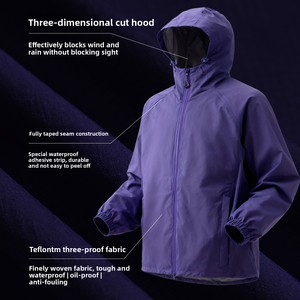
A jacket's technical integrity is only as strong as its weakest seam. Water ingress occurs primarily through needle punctures created during assembly. High-end waterproof jackets require hot-air seam sealing taping. Polyurethane (PU) or TPU heat-seal tape is applied over stitching at precise temperatures (320°C to 350°C) and pressure (2.5 bar) using automated seam-sealing machinery.
Furthermore, stress points such as pocket openings, storm flap ends, and drawcord exits undergo computer-controlled bar-tack reinforcement. Custom private label trim packages—including YKK/SBS waterproof zippers, laser-etched silicone logo patches, customized branded pullers, and anti-corrosive metal snaps—are integrated seamlessly during line assembly to reinforce brand identity.
4. Sourcing Strategy & Risk Mitigation for Global B2B Buyers
When contracting outerwear manufacturing in China, enterprise purchasing teams must establish rigorous protocol gatekeeping:
- Tech-Pack Auditing: Ensure comprehensive sizing charts with specific grading increments for US, EU, and Asian market consumer profiles.
- Lab Dip Approvals: Evaluate fabric lab dips under standardized D65 daylight, TL84 store lighting, and UV light sources to prevent metamerism across trim combinations.
- Pre-Production (PP) Sample Sealing: Establish a golden sample physically signed off by both buyer and factory QA director to serve as the binding reference for AQL 2.5 final inspections.
- FTC & EU Textile Compliance: Verify fiber content labeling, care instruction symbols (ASTM/ISO standard), and country-of-origin tags to bypass customs holds.