0%

Choosing a tracksuit supplier involves more than comparing unit prices. Global buyers must assess fabric options, customization capacity, size grading, production timelines, and communication before placing an order. A brushed fleece sample may feel warm in hand, yet perform differently after washing. Small details matter.

This guide to the Top 10 Customized Tracksuits Suppliers for Global Buyers offers a practical starting point for that research. It considers the kinds of services buyers commonly need, from logo placement and color matching to packaging and repeat-order support. No supplier is right for every brand. Minimum order quantities, sampling fees, and delivery estimates can vary, so buyers should confirm current terms directly and request written specifications.

A supplier’s polished catalog is useful, but it cannot answer every question. Ask how measurements are checked, what happens when a sample needs revision, and how fabric substitutions are communicated. Fit varies. Even a well-made set can miss the mark if sleeve length, waistband tension, or fabric weight differs from the intended design. The comparison ahead can help narrow the field, but it is not a substitute for testing samples or checking references. Some information may be hard to verify from a website alone. That is worth remembering. A careful shortlist, clear specifications, and realistic expectations can make sourcing more dependable for both emerging labels and established apparel buyers.

Top 10 Customized Tracksuits Suppliers for Global Buyers

Understanding Customized Tracksuits and Global Sourcing Needs

Customized tracksuits are coordinated garments designed around a buyer’s fit, fabric, colors, and branding requirements. A useful specification names the fabric weight, fiber blend, lining, zipper type, pocket placement, and size range. “Polyester fabric” alone is not precise enough; two samples may feel very different and behave differently after washing. Fit changes everything.

Global sourcing adds practical questions. Can the supplier provide a size chart with garment measurements, not just body measurements? What is the minimum order quantity for each color? How long do sampling, revisions, and bulk production take? Ask for fabric swatches and a pre-production sample, then check seam strength, print alignment, and shrinkage after washing. These checks take time. They can prevent costly surprises.

Shipping distance, seasonal demand, and production capacity may affect delivery dates, so confirm timelines in writing and leave room for delays. Request clear information about quality checks, payment milestones, packaging, and shipment terms before placing an order. If a supplier promises an unusually fast turnaround, ask which steps are being shortened. It may be a reasonable offer, or it may be a warning worth examining. Not every detail is obvious from a polished sample.

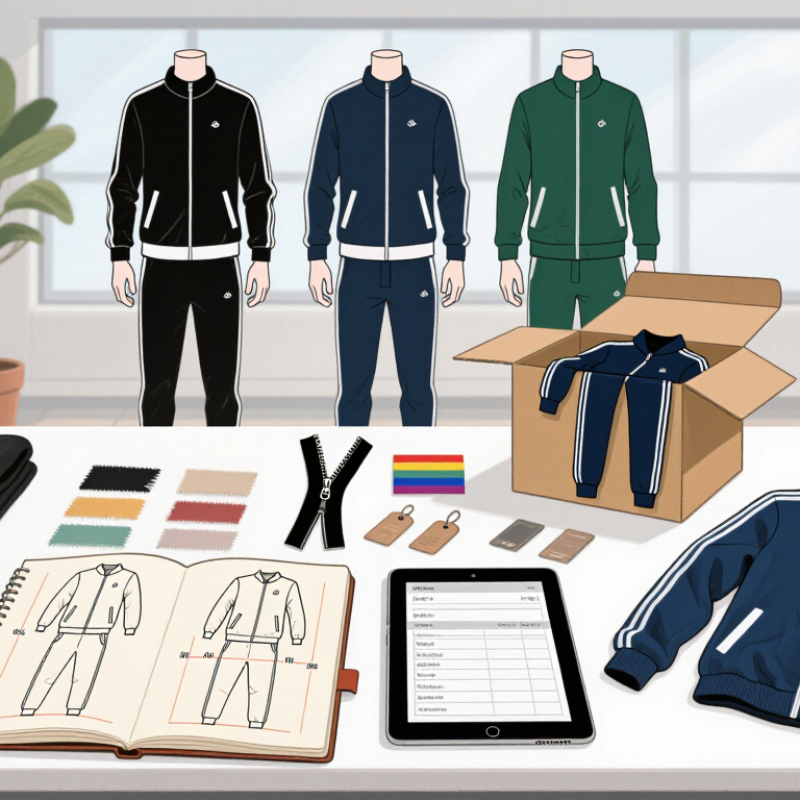
Key Criteria for Evaluating Tracksuit Suppliers

A dependable tracksuit supplier should prove control over fabric, fit, and production—not just offer a low quote. Textile Exchange’s Materials Market Report 2024 estimates global fiber production reached 124 million tonnes in 2023, with polyester representing 57%. That scale makes material traceability important. Ask for fiber composition records, fabric weight, and clear details about any recycled content. Ask for proof. A certificate alone may not show whether the fabric in your bulk order matches the tested sample.

Check samples for more than appearance. Measure shrinkage after washing, inspect colorfastness, and test seams around the crotch, pockets, and cuffs. Request a size set, then compare measurements against your specification. Confirm minimum order quantities, sample charges, production capacity, and realistic lead times in writing. A polished sample can still mislead. One practical weakness in many evaluations is relying on supplier-provided test results without checking the test method or sample batch. Ask who performed each test and when. For global orders, also review packaging details and carton measurements; small discrepancies can complicate warehouse handling. Clear answers matter. A supplier that explains limitations plainly may be more reliable than one promising perfection.

Top 10 Customized Tracksuits Suppliers for Global Buyers

Top 10 Customized Tracksuits Suppliers for Global Buyers

Global buyers comparing the top 10 customized tracksuits suppliers should look beyond the lowest unit price. Grand View Research valued the global sports apparel market at USD 223.3 billion in 2023 and projected 6.6% annual growth through 2030. This broad market signal does not guarantee demand for every custom order, but it underscores the need for reliable production. Ask suppliers about fabric composition, size tolerances, colorfastness testing, and sample approvals. A clear answer matters.

Strong suppliers explain what they can produce, not just what they can sell. Request a sample with your intended fabric, print, and stitching before confirming bulk production. Check whether chest logos align consistently and whether zippers run smoothly after repeated use. Ask for realistic lead times, minimum order quantities, and quality-check procedures. Production photos and buyer references can help, though neither replaces inspecting a physical sample. Even careful checks can miss flaws.

Tips: Compare like with like. Get fabric weight, shipping terms, and defect policies in writing. Start with a small order when possible. A rushed sample review can be costly.

Common Tracksuit Fabric Blend Examples

Illustrative fiber compositions used in tracksuit fabrics. Actual blends vary by fabric, product, and supplier; these are not market-share figures.

Comparing Supplier Capabilities, Quality, and Lead Times

Choosing among the top customized tracksuit suppliers takes more than comparing catalog photos. A capable supplier should review your tech pack, confirm fabric weight, and explain which logo methods suit the material. Ask for a pre-production sample with the intended colors, trims, and fit. Samples matter. Check stitching around pocket corners and waistband seams, where rushed work can show quickly. Request fabric test details, such as shrinkage and colorfastness, rather than relying on broad quality claims. A polished sample can still mislead if bulk fabric comes from a different lot.

Lead times need the same scrutiny as quality. Ask for separate estimates for sampling, production, inspection, and shipping. Confirm the minimum order quantity and monthly capacity before approving a delivery schedule. Ask for proof. A supplier should provide clear inspection records and explain how defects are handled. Buyers should also allow time for fit revisions, especially when sizing must work across several markets. Delays can happen; a realistic schedule is more useful than an unusually fast promise. Compare the ten candidates using the same questions, then weigh communication and documented process alongside price. One imperfect detail: even a strong supplier may answer slowly across time zones, so agree on response windows before production begins.

How to Choose and Work With the Right Supplier

Choosing a tracksuit supplier starts with a precise brief. Specify fabric weight, fiber content, color references, size range, and planned order quantity. Ask how the supplier handles grading, stitching, and quality checks. A clear answer should include measurable standards, not just “premium quality.” Small details matter.

Request a sample made with the intended fabric and trims. Check the zipper, waistband recovery, seam strength, and print alignment after washing. A sample can look right on a hanger but feel restrictive during movement. Even a careful brief can miss a detail, such as pocket depth. Revise the specification before approving bulk production.

Discuss minimum order quantities, sample fees, production timelines, and shipping terms in writing. Ask for a production schedule with clear checkpoints, then confirm who will report delays or quality issues. Keep approved measurements and color references in one document. No checklist catches everything. Leave time for corrections, especially when sizing or fabric choices are new. A supplier’s willingness to explain trade-offs can be as valuable as a low quote.

FAQS

What details should a customized tracksuit specification include?

Include fabric weight, fiber blend, lining, zipper type, pocket placement, and size range. “Polyester fabric” alone is too vague.

Why should buyers request garment measurements?

A garment size chart shows actual measurements, not just suggested body measurements. Fit can vary across markets.

What should buyers inspect in a pre-production sample?

Check seam strength, pocket corners, waistband stitching, print alignment, and zipper movement. Samples matter.

How can buyers check fabric quality?

Request details about shrinkage and colorfastness testing. Wash the sample and compare its size and color afterward.

What production timeline details should buyers confirm?

Ask for separate estimates for sampling, revisions, production, inspection, and shipping. Leave room for delays.

What should buyers ask about order requirements?

Confirm the minimum order quantity for each color and the supplier’s monthly production capacity. These figures can change the plan.

How can buyers compare suppliers fairly?

Ask each supplier the same questions about fabric, quality checks, lead times, and defect handling. Compare written answers, not catalog photos alone.

Is a very fast delivery promise a good sign?

Not always. Ask which production steps may be shortened, and get the timeline in writing. A polished sample can still hide problems.

Conclusion

This guide explores how Customized Tracksuits serve teams, retailers, organizations, and other buyers seeking coordinated apparel tailored to specific designs, materials, fits, and quantities. It explains the practical considerations involved in global sourcing, including clear product specifications, communication across time zones, order flexibility, production capacity, quality control, shipping arrangements, and dependable customer support.

The article also presents ten types of suppliers for buyers to consider and outlines how to compare their capabilities, product quality, customization options, minimum order requirements, pricing, and lead times. Rather than choosing on cost alone, buyers are encouraged to verify samples, confirm timelines and production details in writing, and assess how well each supplier understands their needs. With careful evaluation and clear collaboration, buyers can select a suitable partner and manage the sourcing process with greater confidence.

Ethan Carter

Ethan Carter

Ethan Carter is a highly experienced marketing professional dedicated to helping businesses make informed decisions through clear, practical, and industry-focused content. With a strong understanding of the company’s products, services, and customer needs, Ethan regularly contributes expert......