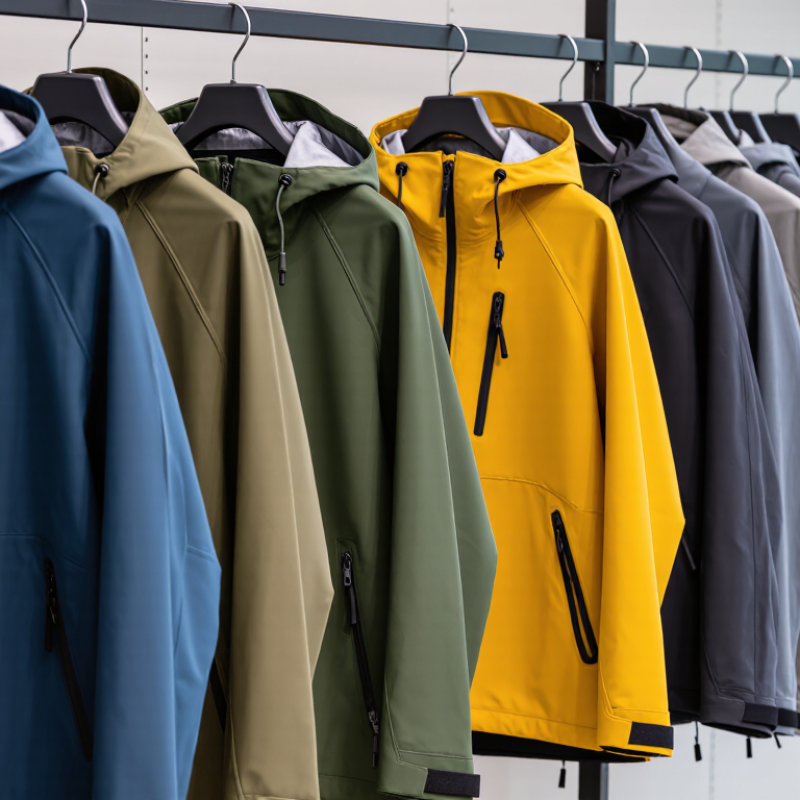
Choosing reliable suppliers is essential when sourcing Wholesale Rain Jackets from China. This guide introduces ten manufacturers and trading companies serving outdoor brands, retailers, and promotional buyers. It focuses on practical evidence, not attractive catalog photos alone.
The comparison considers waterproof ratings, seam-taping quality, fabric weight, ventilation, sizing consistency, and customization options. A jacket may look durable on a studio model, yet fail during a cold, windy delivery shift. Buyers should request samples and inspect zippers, hood adjustments, cuffs, and inner labels. Factory experience also matters. Suppliers with documented production records, stable quality systems, and clear export procedures usually provide stronger support.
Cost is only one part of the decision. Minimum order quantities, sample fees, production time, packaging, and shipping terms can change the final margin. Communication deserves attention too. A fast reply does not always mean accurate technical understanding. Ask for fabric test reports, compliance documents, and recent product references where appropriate. No supplier is perfect. Some details still require direct verification.
This overview aims to help importers create a practical shortlist rather than make an automatic purchase. The featured companies should be evaluated against your market, climate, target customer, and order volume. Small weaknesses may appear after repeated washing or extended rain exposure. That is why careful sampling, written specifications, and pre-shipment inspection remain valuable. Conditions change. Supplier capabilities, prices, and certifications should be confirmed before signing any agreement.
How to Evaluate China’s Wholesale Rain Jacket Suppliers
China’s rain jacket market offers many choices, but supplier quality varies sharply. The China National Garment Association reports that technical apparel demand is moving toward lighter, multifunctional products. This trend makes fabric testing essential. Ask suppliers for hydrostatic pressure and breathability results, not attractive photos. ISO 811 measures water resistance, while ISO 11092 evaluates moisture-vapor transmission. A jacket can pass one test and fail the other.
Request a factory profile, production capacity, monthly output, and recent export records. Compare these details with your order volume. For example, a small workshop may handle 500 pieces well, but struggle with 10,000 units. Check seam-sealing machines, fabric inspection procedures, and zipper performance. The World Bank’s Logistics Performance Index shows that delivery reliability remains a major supply-chain factor. Therefore, confirm lead times using written production schedules. Samples should include taped seams, hood adjustments, pocket drainage, and packaging details. One overlooked detail can create expensive returns.
Tips: Order at least two samples from different batches. Test them under continuous shower spray. Weigh the fabric and measure seam tape width. Ask for third-party test reports, but verify the laboratory and test date. Review defect policies before paying a deposit. Do not choose the lowest quotation automatically. I have seen “waterproof” claims based only on coating appearance. That is weak evidence. A supplier may also provide perfect samples, then use cheaper fabric in bulk production. Independent pre-shipment inspection reduces this risk, although it cannot replace clear technical specifications.
China’s top ten wholesale rain jacket suppliers stand out through different product strengths, not identical catalogs. One focuses on lightweight PVC shells for promotional orders. Another produces PU-coated jackets with soft hand feel and sealed seams. A third specializes in breathable polyester designs for commuters and outdoor workers. There are also factories known for reflective work jackets, packable ponchos, children’s rainwear, insulated waterproof coats, and custom printed shells. One supplier handles small trial orders well, while another offers stronger capacity for seasonal retail programs. The tenth is valued for size consistency and careful packaging.
Product testing should guide the shortlist. Ask for hydrostatic pressure results, seam-tape samples, zipper tests, and fabric composition records. A reliable supplier should explain coating thickness clearly. It should also provide pre-production samples before bulk cutting. In factory discussions, check cutting-room control, inspection points, carton labeling, and replacement procedures. These details reveal more than polished catalog photos.
No factory is perfect. A heavier coating may reduce breathability. A low price may hide weaker snaps or uneven stitching. I would compare at least three samples under real rain, including hood adjustment, cuff comfort, and pocket access. Rain jackets often fail at the seams, not the fabric. That detail deserves attention. Supplier claims still need verification through samples, records, and repeated communication.
This benchmark compares ten anonymous supplier profiles using five practical wholesale rain-jacket dimensions: waterproof protection, breathability, fabric durability, packability, and customization capability. Scores are normalized on a 100-point scale from product construction features commonly specified in wholesale rainwear.
Higher scores indicate stronger product capability in the selected category. Actual performance should be confirmed through samples, laboratory testing, certifications, and production audits before placing an order.
When comparing China’s top 10 wholesale rain jacket suppliers, material selection deserves close attention. Polyester offers a practical balance of cost, strength, and color stability. Nylon feels lighter and softer, but it may need stronger coating protection. PU and TPU coatings improve water resistance without making the fabric excessively heavy. Recycled fibers can support sustainability goals, although their performance should be verified through testing.
Design decisions affect comfort during real weather. I recommend checking hood adjustment, cuff construction, pocket drainage, and ventilation openings. Seam-taped jackets usually provide better protection than stitched-only styles. A matte finish suits urban outerwear, while reflective panels improve visibility in dim conditions. Fit samples should be tested with sweaters underneath, not only with thin shirts.
Customization can include fabric weight, coating level, lining, colors, labels, zippers, and packaging. A clear tech pack reduces mistakes between sampling and bulk production. Ask suppliers for waterproof testing, seam-strength data, and pre-production samples. I once focused too much on appearance and overlooked noisy fabric during movement. That was a costly reminder. Minimum order quantities, sampling fees, and production timelines also need written confirmation. Some suppliers communicate well but provide weak technical records, so trust should come from documents and physical samples, not promises.
China’s top ten wholesale rain jacket suppliers often serve different buyer needs. Some focus on budget PVC coats, while others produce breathable three-layer jackets. Typical MOQs range from 300 to 1,000 pieces per color. Custom fabrics, logos, and packaging can raise the minimum order.
Indicative pricing is usually $4–$9 for basic raincoats and $12–$28 for technical jackets. Prices depend on fabric weight, seam sealing, zippers, and waterproof ratings. A factory making 30,000–100,000 pieces monthly may offer better capacity. However, high capacity does not always mean consistent quality. Request recent production records and inspect stitching, hood adjustment, and taped seams.
Standard samples usually require 7–12 days. Bulk production may take 25–45 days after approval and deposit. Complex designs can require 50 days or more. Ask whether the lead time includes fabric sourcing. It often does not. One practical mistake is comparing quotations without matching specifications. A cheaper quote may use thinner fabric or fewer quality checks. Request a pre-production sample, inspection report, and clear tolerance standards. Verify factory registration, export experience, worker safety practices, and product testing through independent documentation. A spreadsheet helps, but it cannot replace a physical sample. Pricing and capacity should be reconfirmed before every seasonal order.
Choosing among China’s top 10 wholesale rain jacket suppliers requires more than comparing prices. Request production samples before placing a bulk order. Check taped seams, zipper protection, hood adjustment, fabric coating, and water resistance after repeated washing. A reliable supplier should provide measurable test results, not only product photos. Ask for inspection records covering stitching density, size tolerance, color consistency, and carton packing. Small defects often become expensive during large shipments.
Certifications also need careful review. Request current copies of ISO 9001, OEKO-TEX, or other relevant certificates. Confirm the certificate holder, factory address, product scope, and expiration date. A certificate may belong to a trading office rather than the actual factory. Independent laboratory reports can verify waterproof performance, chemical safety, and fabric composition. However, reports should match the exact material and production site used for your order.
Tips: Verify the supplier’s legal registration and factory address. Arrange a live video tour, then compare it with shipping documents. Use a pre-shipment inspection with clear acceptance standards. Ask how rejected garments are repaired or replaced. A polished catalog can still hide weak quality systems. I once underestimated packaging checks; crushed cartons caused avoidable delays. Supplier verification is not perfect, and even experienced buyers should revisit their assumptions.
| No. | Anonymous Supplier Profile | Recommended Product Focus | Key Quality-Control Evidence | Relevant Certifications or Test Standards | Supplier Verification Steps | Wholesale Readiness Score |
|---|---|---|---|---|---|---|
| 1 | Supplier Profile A | Lightweight packable rain jackets | Pre-production sample approval, fabric GSM verification, seam inspection, zipper and snap-function testing | ISO 9001 quality-management evidence; ISO 811 hydrostatic-pressure testing; AATCC 22 water-repellency testing | Confirm factory address, review recent test reports, compare approved sample with bulk-production sample, and conduct pre-shipment inspection | High |
| 2 | Supplier Profile B | PU-coated polyester rainwear | Coating uniformity checks, peel-strength testing, colorfastness testing, needle-hole inspection, and carton-drop testing | ISO 9001 where applicable; ISO 811 for water resistance; ISO 105 series for textile colorfastness | Request coating specifications, verify laboratory accreditation, inspect production-line controls, and test random cartons before shipment | High |
| 3 | Supplier Profile C | Seam-sealed outdoor rain jackets | 100% seam-tape coverage, seam adhesion checks, hood-adjustment testing, water-spray testing, and visual workmanship inspection | EN 343 may be relevant for protective clothing against rain; ISO 811 for hydrostatic pressure; ISO 6330 for washing procedures | Verify the scope of any EN 343 claim, inspect seam-tape machinery, review wash-test results, and approve a sealed reference sample | High |
| 4 | Supplier Profile D | Recycled-fabric rain jackets | Material-composition verification, recycled-content documentation, restricted-substance screening, color consistency, and dimensional stability checks | GRS or RCS documentation when recycled-content claims are made; OEKO-TEX Standard 100 testing for harmful substances where required | Check transaction certificates, verify certificate validity and scope, match fabric lot numbers, and commission independent material testing | Medium–High |
| 5 | Supplier Profile E | Children’s and family rain jackets | Small-part safety review, cord and drawstring assessment, sharp-edge inspection, colorfastness testing, and size-set measurement control | Applicable destination-market children’s product rules; OEKO-TEX Standard 100 may support chemical-safety verification; ISO 105 colorfastness methods | Review children’s-wear risk assessments, inspect cords and fasteners, verify age-grade labeling, and obtain destination-market compliance reports | High |
| 6 | Supplier Profile F | Heavy-duty work and utility rainwear | Fabric tear-strength testing, seam-strength testing, abrasion checks, reflective-trim adhesion, and repeated-wear evaluation | EN 343 may apply to protective rain clothing; ISO 13937 for tear strength; ISO 12947 for abrasion resistance | Confirm intended-use classification, verify performance-test conditions, inspect reflective materials, and conduct independent pre-shipment testing | Medium–High |
| 7 | Supplier Profile G | Fashion-oriented PU or TPU raincoats | Surface-finish inspection, color approval under standard lighting, odor evaluation, coating-flex testing, and hardware corrosion checks | REACH-related restricted-substance compliance for EU sales; ISO 105 colorfastness methods; supplier-specific coating test specifications | Request a full bill of materials, review chemical declarations, test coated fabric after flexing, and approve a production-equivalent sample | Medium |
| 8 | Supplier Profile H | Breathable membrane rain jackets | Moisture-vapor performance testing, hydrostatic-pressure testing, seam-tape inspection, zipper-water-resistance testing, and wash durability checks | ISO 811 for hydrostatic pressure; ISO 11092 for thermal and water-vapor resistance; ISO 6330 for textile washing procedures | Verify laboratory methods, compare membrane performance before and after washing, inspect seam-tape bonding, and audit batch records | High |
| 9 | Supplier Profile I | Private-label promotional rain jackets | Artwork and logo-placement approval, print adhesion testing, size-chart verification, packing-list reconciliation, and final AQL inspection | ISO 2859-1 is commonly used for attribute-sampling inspection; destination-market chemical and labeling requirements must also be checked | Verify legal business details, approve a decorated sample, confirm packaging specifications, and use an independent inspection company before dispatch | Medium–High |
| 10 | Supplier Profile J | Large-volume basic rain jackets | Incoming-fabric inspection, inline sewing checkpoints, measurement audits, defect classification, carton count verification, and loading supervision | ISO 9001 evidence may support process control; ISO 2859-1 sampling plans; ISO 811 or equivalent water-resistance testing | Validate monthly capacity, inspect production records, perform a factory audit, approve a golden sample, and complete final random inspection | Medium–High |

Product strengths vary widely. Some make lightweight PVC shells, while others produce soft PU-coated jackets with sealed seams. Breathable polyester suits commuters and outdoor workers. Reflective jackets support visibility in low-light work areas. Packable ponchos save storage space. Insulated coats provide more warmth. Custom printed shells support promotional orders.
Compare at least three samples under real rain. Check the hood, cuffs, zipper cover, pockets, and seam construction. Wear each jacket while walking and reaching. Small discomfort matters. A heavier coating may improve water resistance but reduce breathability. This trade-off needs honest review.
Request hydrostatic pressure results, seam-tape samples, zipper tests, and fabric composition records. Ask for coating thickness details and repeated-wash results. Testing should match the exact material and factory used for your order. General reports may mislead buyers.
Review stitching density, size tolerance, color consistency, seam sealing, and carton packing. Ask for a pre-production sample before bulk cutting. Inspect hood adjustments and cuff comfort closely. Rain jackets often fail at seams. That point is easy to overlook.
Request current certificates and check the holder, factory address, product scope, and expiration date. Confirm that reports match the actual fabric and production site. A document from an office may not prove factory performance. Paperwork helps. It does not replace physical samples.
Verify legal registration and the factory address. Arrange a live video tour and compare the location with shipping documents. Ask to see cutting areas, inspection stations, packing zones, and replacement procedures. A polished catalog proves little. Look behind it.
Use pre-shipment inspections with clear acceptance standards. Check carton labels, carton strength, garment counts, and packing protection. Ask how rejected garments are repaired or replaced. Photograph packed cartons before loading when possible. Crushed cartons can create avoidable delays. I once underestimated this risk.
Not necessarily. A low price may hide weak snaps, uneven stitching, thin coating, or poor packaging. Compare product quality, testing records, production capacity, and replacement terms. No checklist is flawless. Buyers should revisit their assumptions after each sample and shipment.
This guide explains how to identify reliable China-based suppliers of Wholesale Rain Jackets by comparing product strengths, manufacturing expertise, and service capabilities. It highlights key evaluation factors, including jacket materials, waterproof performance, breathable fabrics, functional designs, seasonal collections, and customization options such as colors, logos, packaging, and private-label details. Buyers will also learn how to compare minimum order quantities, pricing structures, production capacity, sample policies, and expected lead times to select suppliers that match their business requirements.
The article also outlines practical quality-control methods, including material inspections, stitching checks, waterproof testing, size verification, and pre-shipment inspections. It discusses the importance of reviewing relevant certifications, factory documentation, production records, and customer references before placing an order. By combining supplier verification with a careful assessment of quality, communication, flexibility, and delivery reliability, importers and retailers can reduce purchasing risks and build more dependable long-term sourcing relationships.