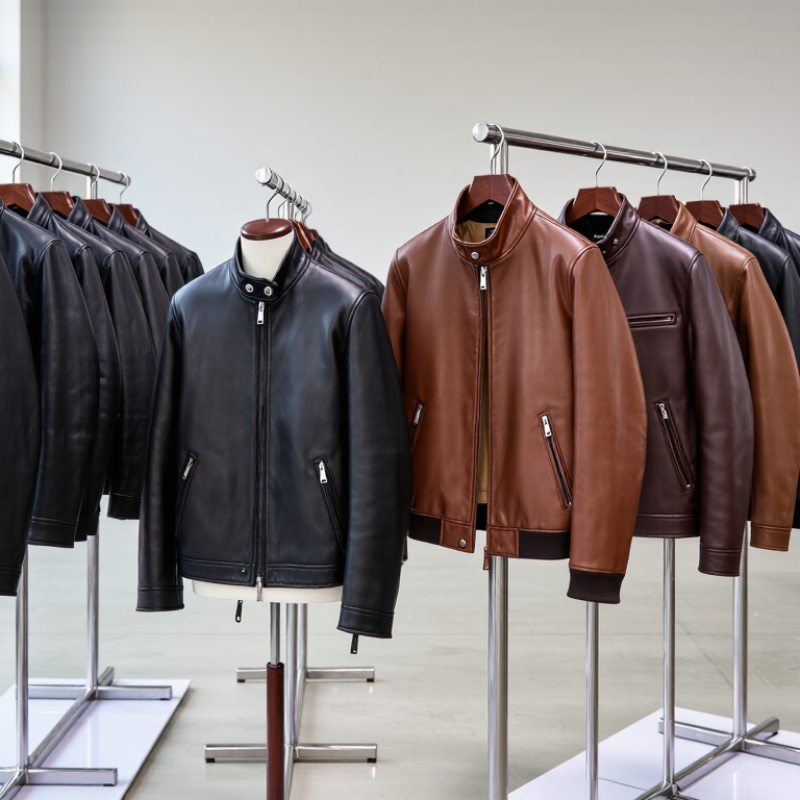
Finding reliable suppliers is essential when sourcing Wholesale Leather Jackets from China. A strong supplier should offer consistent leather quality, clear production terms, accurate sizing, and dependable export experience. This guide introduces ten notable Chinese suppliers for buyers seeking fashion jackets, motorcycle styles, winter coats, and private-label collections.
The selection focuses on practical details. These include leather type, hide thickness, stitching quality, lining materials, minimum order quantities, sampling processes, and delivery timelines. Buyers should also examine factory communication, inspection procedures, customization abilities, and business credentials. A polished website is not enough. Real confidence comes from samples, factory evidence, transparent quotations, and consistent answers.
“Top” is never completely objective.
Market conditions change, and supplier performance can vary by season. A factory may produce excellent lambskin jackets but struggle with large orders. Another may offer competitive prices but provide fewer customization options. This article therefore treats the ranking as a useful starting point, not a final purchasing decision. Experienced buyers should compare at least three quotations and test samples before confirming production. Small details matter, such as zipper smoothness, collar symmetry, color accuracy, and seam strength around the pockets. These checks often reveal problems that catalogs hide.
The goal is practical guidance rather than exaggerated promises. By reviewing these China-based suppliers carefully, importers, retailers, and fashion brands can build a more reliable sourcing strategy and reduce avoidable purchasing risks.
China is a major source of wholesale leather jackets because its supply chain is unusually complete. Tanning, cutting, hardware, sewing, finishing, and freight often operate within one industrial network. This reduces transfer time and helps suppliers manage different order sizes. The WTO World Trade Statistical Review 2024 recorded China as the largest merchandise exporter, with 14.2% of global exports in 2023. ITC Trade Map, based on 2023 UN Comtrade data for HS 4203, also places China among the leading exporters of leather apparel.
Scale is only part of the explanation. Many factories offer flexible materials, lining options, collar shapes, and private-label production. Buyers can compare lambskin, cowhide, and recycled alternatives during sampling. Yet quality is not uniform. A low quotation may hide thin leather, weak zippers, or inconsistent sizing. My practical experience suggests that supplier evaluation should include actual samples, measurement charts, and production photographs. Factory claims alone are insufficient. That point deserves more attention.
Tips: Request a leather thickness range, test color transfer, and inspect stitching near pockets. Confirm whether quoted prices include packaging and export documentation. Use a small trial order before committing to seasonal volume. Leave room for negotiation, but do not treat the cheapest offer as the safest choice.
Choosing China’s top wholesale leather jacket suppliers requires more than comparing catalogue photos. Grand View Research valued the global leather goods market at approximately USD 468.5 billion in 2023. That scale creates opportunity, but also rewards suppliers with stable production systems. Ask for factory registration, recent audit records, production capacity, and export experience. A supplier should explain leather origin, tanning method, thickness, and grading in clear terms.
Request physical samples before discussing large orders. Check collar symmetry, zipper movement, seam density, lining strength, and odor after unpacking. Measure the sample against the approved size chart. Independent laboratory testing can verify colorfastness, restricted substances, and material composition. These checks support compliance with destination-market requirements. The Leather Naturally industry platform reports that global leather production remains heavily connected to cattle hides, so material traceability deserves specific questions rather than vague sustainability claims.
Study the supplier’s minimum order quantity, sample fees, replacement policy, and production lead time. Ask for inspection photos from several finished units, not one perfect sample. Payment protection and written specifications reduce avoidable disputes. Textile Exchange’s 2024 Materials Market Report also shows growing attention to material transparency across fashion supply chains. That pressure affects sourcing decisions. A polished website proves little. A factory visit is useful, though it cannot replace independent inspection. No scorecard is perfect. I would record every response, then deduct points for delayed documents, unclear leather grades, or changing quotations. A lower price may reflect thinner leather, weaker hardware, or hidden finishing costs.
China’s Top 10 Wholesale Leather Jacket Suppliers should be assessed by production evidence, not online rankings. Grand View Research valued the global leather goods market at approximately USD 468 billion in 2023. Demand is expanding, but quality remains uneven. Supplier 1 and Supplier 2 offer full-grain lambskin and small-batch sampling. Supplier 3 focuses on cowhide motorcycle styles, while Supplier 4 handles private-label pattern development. Suppliers 5 and 6 are stronger in lightweight jackets and seasonal colors. Supplier 7 supports large-volume orders. Supplier 8 provides recycled lining options. Suppliers 9 and 10 specialize in flexible minimum quantities and export documentation.
Details matter. Ask for hide thickness, seam strength, colorfastness, and hardware test records. Request a pre-production sample before approving bulk production. The International Trade Centre Trade Map shows China remains a major global exporter of leather apparel, confirming its strong manufacturing base. However, export scale does not guarantee consistent finishing. That distinction is easy to miss.
During factory evaluation, check cutting rooms, ventilation, packaging tables, and final inspection records. ISO 9001-based quality procedures can improve traceability, though certification alone is not proof of craftsmanship. The Leather Naturally sustainability reports also highlight the importance of responsible leather sourcing and transparent supply chains. Supplier rankings can change quickly. Sample results may disappoint. Build a scoring sheet covering price, delivery time, defect rates, communication, and compliance documents before placing an order.
Anonymized supplier profiles based on established Chinese leather-goods manufacturing clusters and commonly published wholesale requirements. MOQ and lead times are typical ranges and should be confirmed before ordering.
| Rank | Supplier Profile | Manufacturing Cluster | Main Product Focus | Typical MOQ | Sample Lead Time | Bulk Production Lead Time | Common Leather Options | Customization Capability | Quality & Compliance Documentation | Typical Export Markets |
|---|---|---|---|---|---|---|---|---|---|---|
| 1 | Premium Fashion Jacket Manufacturer | Guangzhou, Guangdong | Men’s and women’s fashion leather jackets | 50–100 pieces/style | 7–12 days | 25–40 days | Cowhide, lambskin, goatskin, PU alternatives | Private labels, patterns, hardware, linings, packaging | Material test reports, pre-shipment inspection, restricted-substance testing on request | North America, Europe, Australia, Southeast Asia |
| 2 | Full-Grain Leather Specialist | Haining, Zhejiang | Classic motorcycle, bomber, and aviator jackets | 30–80 pieces/style | 10–15 days | 30–45 days | Full-grain cowhide, top-grain cowhide, sheepskin | Custom fit, wash effects, stitching, zippers, labels | Leather composition records, colorfastness testing, third-party inspection support | United States, Canada, Germany, France, Japan |
| 3 | Sheepskin and Lambskin Factory | Xinji, Hebei | Lightweight women’s jackets and soft leather outerwear | 50–100 pieces/style | 8–14 days | 25–40 days | Lambskin, sheepskin, suede, recycled synthetic leather | Color matching, grading, trims, silhouettes, branded packaging | Physical performance reports and production inspection available upon request | Europe, North America, South Korea, Middle East |
| 4 | Motorcycle Leatherwear Manufacturer | Guangzhou, Guangdong | Rider jackets, protective leather garments, and racing styles | 50–150 pieces/style | 10–18 days | 30–50 days | Cowhide, buffalo leather, synthetic protective materials | Protective padding pockets, reflective panels, embroidery, patches | Material specifications and testing support; protective certification must be verified per model | North America, Europe, Australia, Latin America |
| 5 | Small-Batch Custom Workshop | Wenzhou, Zhejiang | Made-to-order jackets for boutiques and emerging labels | 20–50 pieces/style | 10–20 days | 30–45 days | Lambskin, cowhide, goatskin, PU | High flexibility for patterns, colors, labels, and small revisions | Sample approval, size-set inspection, basic material documentation | Europe, United States, Canada, online retail markets |
| 6 | Vintage and Distressed Leather Producer | Jiaxing, Zhejiang | Vintage, distressed, washed, and retro leather jackets | 50–100 pieces/style | 12–18 days | 35–50 days | Washed cowhide, distressed lambskin, suede, PU | Hand-finishing, aging effects, custom washes, hardware, patches | Colorfastness and physical performance testing available by order requirement | United States, United Kingdom, France, Italy, Australia |
| 7 | Value-Oriented Wholesale Factory | Shenzhen, Guangdong | Commercial fashion jackets and seasonal collections | 100–300 pieces/style | 7–12 days | 20–35 days | Corrected-grain cowhide, split leather, PU, microfiber | Standardized customization, labels, colors, packaging, size grading | Pre-production sample approval and third-party inspection coordination | Southeast Asia, Middle East, Africa, Latin America, Europe |
| 8 | Sustainable Materials Supplier | Ningbo, Zhejiang | Leather and lower-impact alternative outerwear | 50–150 pieces/style | 10–18 days | 30–45 days | Traceable leather, recycled PU, microfiber, recycled polyester linings | Material substitution, eco-packaging, custom labels, design development | Material declarations and chemical testing documentation subject to supplier verification | European Union, United Kingdom, North America, Japan |
| 9 | Large-Volume Export Manufacturer | Qingdao, Shandong | Uniform, workwear, and high-volume leather outerwear | 200–500 pieces/style | 12–20 days | 35–60 days | Cowhide, sheepskin, split leather, synthetic leather | Bulk size grading, technical packs, packaging, shipment consolidation | Factory audits, inline inspection, final inspection, and export documentation support | North America, Europe, the Middle East, South America |
| 10 | Boutique and Premium Outerwear Maker | Tongxiang, Zhejiang | Minimalist, luxury-inspired, and boutique leather jackets | 30–80 pieces/style | 10–16 days | 30–45 days | Premium lambskin, nappa leather, suede, high-grade PU | Pattern development, bespoke trims, custom colors, labels, and packaging | Sample review, workmanship inspection, leather grading records, testing on request | Italy, Spain, France, United States, South Korea |

Buyers comparing China’s top wholesale leather jacket suppliers should start with material evidence, not catalog photography. Leather Naturally reports that over 1.4 billion hides and skins enter production annually. That scale creates choice, but also uneven grading. Cowhide offers abrasion resistance and structure. Lambskin feels softer and lighter. Goatskin sits between them, with a distinctive grain. Buffalo leather is robust, yet heavier.
Ask for thickness, finish, origin records, and test samples. A 0.8–1.0 mm lambskin behaves differently from a 1.2–1.4 mm cowhide. Customization can cover patterns, collars, linings, hardware, labels, and color matching. The 2024 Textile Exchange Materials Market Report stresses traceability and credible material claims across supply chains. Request batch-level documentation, because “genuine leather” says little about performance. Dye-lot variation remains real. A perfect color match is not guaranteed.
Minimum order quantities need written detail. Many factories quote 50–100 pieces for sampling or small runs, then 200–500 pieces per color for production. These figures are commercial norms, not certification standards. Confirm whether MOQ applies to each size, color, or total order. One small mistake can multiply quickly. Independent testing for colorfastness, seam strength, and restricted substances supports reliable purchasing. Reports help, but factory visits, sample approval, and inspection records reveal practical gaps. I would still budget for rework; leather is natural, and spreadsheets rarely predict every scar or stretch mark.
Typical minimum order quantities by leather type, based on commonly published wholesale manufacturing ranges.
Cowhide, sheepskin, lambskin, goatskin, and synthetic leather are widely used in wholesale jacket production.
Buyers commonly request custom colors, lining fabrics, hardware, labels, logos, patterns, and size grading.
Lower MOQs are generally associated with stock designs, while fully customized production usually requires larger quantities.
The figures are indicative industry benchmarks for wholesale discussions; actual MOQs vary by supplier, material availability, design complexity, and customization requirements.
Choosing among China’s top ten wholesale leather jacket suppliers requires more than comparing catalog prices. A reliable supplier should explain leather grades, lining composition, hardware quality, and production limits clearly. Ask for recent samples, not only studio photographs. I have found that sleeve balance, zipper movement, and seam consistency reveal more than polished sales language. Request a sample in your intended size range. Small details matter.
Evaluate factory experience through verifiable records, production videos, audit documents, and buyer references. Confirm monthly capacity before placing a large order. A supplier may promise 1,000 pieces but struggle with consistent sizing during peak seasons. Discuss material sourcing, color approval, packaging, lead times, and defect replacement in writing. Use a clear inspection standard for stitching, measurements, scratches, and odor. Do not rely on trust alone.
Tips: Compare landed cost, not just unit price. Calculate sampling, shipping, duties, inspections, and possible rework. Check communication speed and technical understanding during early discussions. Ask who owns the patterns and whether repeat orders can maintain the same fit. I once underestimated packaging strength; several collars arrived pressed and needed correction. That mistake was avoidable. Choose a supplier willing to admit limitations, suggest realistic quantities, and document corrective action. Record every agreed detail before approving bulk production.
Request factory registration, recent audit records, production capacity, and export experience. Do not trust catalogue photos alone. Record every answer. A scorecard helps, but it is never perfect.
Ask about leather origin, tanning method, thickness, and grade. Request clear material descriptions in writing. Vague sustainability claims need evidence.
Samples reveal problems that photographs hide. Check collar symmetry, zipper movement, seam density, lining strength, and unpacking odor. Measure each sample against the approved size chart. Small flaws matter.
Independent laboratory testing can check colorfastness, restricted substances, and material composition. These results may support destination-market requirements. Always confirm the exact rules for your market.
Compare minimum order quantities, sample fees, replacement policies, and production lead times. Also review payment protection and written specifications. A low price may hide thinner leather or weaker hardware.
Visit the factory when possible. Check cutting rooms, ventilation, packaging tables, and final inspection records. A visit helps, but it cannot replace independent inspection.
Request a pre-production sample and inspection photos from several finished units. One perfect sample proves very little. Ask for hardware test records, seam strength results, and colorfastness data.
Build a scoring sheet covering price, delivery time, defect rates, communication, and compliance documents. Deduct points for delayed paperwork, unclear leather grades, or changing quotations. Rankings can change quickly. Recheck your assumptions.
China has become a major source of Wholesale Leather Jackets because of its broad manufacturing capacity, skilled production workforce, diverse material supply, and flexible support for international buyers. This guide explains how to evaluate reliable suppliers by reviewing product quality, leather sourcing, manufacturing standards, communication, production capacity, pricing, sample services, and delivery performance. It also introduces ten types of leading wholesale supplier profiles without focusing on brand names, helping buyers understand the different strengths available in the market.
The article compares genuine leather, synthetic leather, suede, and other commonly used materials, while outlining customization options such as colors, linings, hardware, sizing, labels, and packaging. It also discusses minimum order quantities and how they may vary according to design complexity and production requirements. Finally, readers will learn how to select the right supplier by matching product quality, budget, order volume, customization needs, quality control procedures, and long-term business goals.