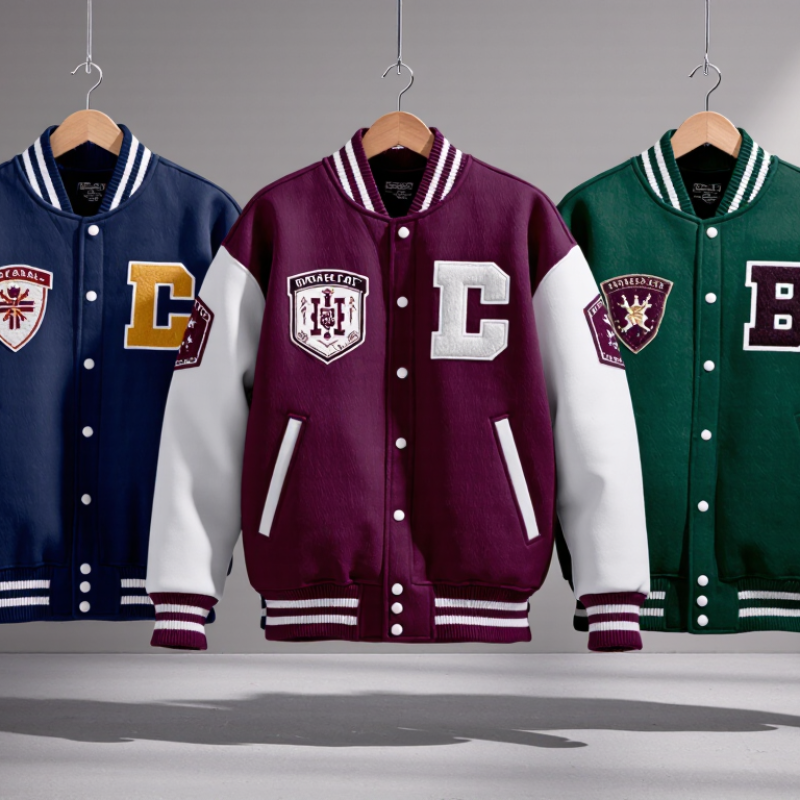
Custom Varsity Jackets turn school memories, team pride, and personal style into something you can wear for years. They are not simply wool bodies with leather sleeves. Every choice matters, from the rib-knit collar to the placement of a chenille letter. A jacket can feel bold, balanced, or strangely crowded.
Jeffrey Banks, a fashion designer and curator with deep knowledge of American collegiate apparel, offers a useful principle: “Fashion is about dressing according to what’s fashionable. Style is more about being yourself on purpose.” That idea fits Custom Varsity Jackets well. Your colors, patches, initials, and sleeve details should represent a real story. Copying a popular design may look safe, but it can feel empty later.
Buying one requires practical judgment. Start with a clear purpose. Is it for a sports team, a graduation gift, a business, or daily wear? Check the fabric weight, lining, snap quality, embroidery density, and size chart. Measure a jacket you already own. Do not trust small, medium, or large labels alone. Ask for a digital mock-up before production. Examine how names, numbers, and patches align. Small errors become obvious on a dark sleeve.
A reliable supplier should explain production time, care instructions, material options, and revision policies. Customer photos can help, but they are not perfect proof. Colors may change on different screens. My own reflection is simple: the cheapest option may save money today, yet poor stitching can shorten the jacket’s life. This guide explores how Custom Varsity Jackets are made, how to compare sellers, and how to choose a design that still feels right after the excitement fades.
Custom varsity jackets are personalized outerwear built around a classic athletic silhouette. They usually combine a wool or wool-like body with leather, faux leather, or synthetic sleeves. Customers add chenille letters, embroidered names, numbers, patches, and colored ribbed cuffs. The design may represent a school, team, workplace, club, or personal milestone. It is not always officially issued.
Personalization has strong commercial support. McKinsey’s 2021 personalization report found that 71% of consumers expect personalized interactions, while 76% feel frustrated without them. An adjacent market signal comes from Grand View Research, which valued the global custom T-shirt printing market at about $4.3 billion in 2023. These figures do not measure varsity jackets directly. Still, they show growing demand for made-to-order apparel.
Buying one requires more than choosing attractive colors. Measure your chest, sleeve length, and preferred layering space. A jacket should allow a sweatshirt underneath without pulling across the shoulders. Check the fabric weight, snap quality, lining, embroidery density, and patch edges. Ask for a digital proof before production. A small spelling error can become expensive. Production samples are even better, although they may cost extra. Review the size chart carefully, because “custom” does not always mean individually fitted. Delivery times can stretch during graduation or sports seasons. I would also confirm alteration, return, and care policies before paying. Personalization feels special, but poor construction quickly changes that feeling.
A custom varsity jacket combines a wool or wool-blend body with contrasting sleeves, rib-knit trim, snap closures, and personalized details such as chenille patches, embroidery, names, numbers, or graduation years. The chart below shows typical planning ranges for the main cost components of a custom jacket, excluding brand-specific pricing.
When buying, compare the jacket material, sizing chart, customization method, production time, proofing process, return policy, and shipping cost before placing an order. Actual prices vary by fabric quality, order quantity, artwork complexity, and supplier location.
Custom varsity jackets combine a structured body with personal details. In my experience, material choice affects warmth, weight, movement, and long-term care. Wool-blend bodies feel warm and hold their shape, but they may need careful cleaning. Cotton feels softer and more breathable. Polyester is lighter, dries quickly, and usually costs less. Sleeves can use genuine or synthetic leather, nylon, or matching fabric. Synthetic leather resists rain better, though it may crease differently. Check the fiber percentages before ordering. They tell you more than a glossy product photo.
Style decisions begin with fit. A classic jacket has snap buttons, striped ribbed cuffs, and a relaxed waist. Slim cuts look sharper, while oversized shapes leave room for hoodies. Choose a collar height that feels comfortable when zipped or fastened.
Popular details include chenille letters, embroidered names, felt numbers, woven patches, and printed lining. Ask how many stitches or layers each design uses. Heavy decorations can pull on thin fabric. Keep the back artwork balanced with the front. Too much detail can become visual noise.
Before buying, measure a jacket you already wear and compare those numbers with the seller’s chart. Do not rely on your usual size. Request a digital proof showing colors, placement, and spelling. I once overlooked a slightly uneven letter, and it changed the finished look. Small errors matter. Confirm production time, care instructions, closure type, and alteration or return terms in writing. A sample swatch can reveal texture and color differences that screens hide. Good customization should feel personal, not merely crowded.
A custom varsity jacket should begin with a clear visual plan, not a random collection of patches. Decide the jacket’s purpose: school memory, team identity, club milestone, or everyday wear. That choice guides the colors, lettering, fabric weight, and decoration. Measure your chest, shoulder width, and sleeve length before ordering. Compare those numbers with the seller’s size chart, because sizing standards vary. Choose wool-blend bodies for warmth, leather or synthetic sleeves for structure, and ribbed cuffs for a close fit. Use a simple front-and-back sketch. Place the main letter where it remains readable when seated or wearing a backpack. Do not overcrowd the sleeves. A small date or name can add meaning without making the design noisy.
Tips: Request a digital mockup before production. Confirm thread colors, patch sizes, and spelling. Ask for close-up photos of embroidery quality. Check the production timeline. Leave room for errors. Even careful designs can look different on fabric. My first design might seem balanced on paper but feel crowded after stitching, so review it at actual size. A small revision budget can prevent disappointment.
Before buying, verify the material details, lining, closure type, care instructions, delivery date, and alteration policy. Ask whether measurements are taken flat or around the body. That detail prevents avoidable fitting mistakes. Keep written approval of every letter and number. One typo can damage an otherwise thoughtful jacket. Also consider how often you will wear it. An elaborate design may photograph well but feel awkward at school or work. Design for movement, not only appearance.
Custom varsity jackets are easiest to buy through specialist jacket makers, local embroidery studios, and established online custom-order platforms. A specialist maker usually offers wool-blend bodies, leather or synthetic sleeves, chenille patches, embroidery, and snap-button options. Local studios provide a useful advantage: you can touch the fabric and check sample stitching before paying.
Online ordering remains convenient, but it needs careful checking. The National Retail Federation and Appriss Retail reported that 17.6% of U.S. retail sales were returned in 2023, showing why sizing and return policies matter. Measure your chest, sleeve length, and jacket length with a soft tape. Compare those numbers with the seller’s size chart. Do not rely on “medium” alone. Ask for a digital proof before production, especially when placing names, numbers, or school-style lettering.
Read independent reviews for comments about delivery times, patch alignment, fabric weight, and customer service. Baymard Institute’s checkout research places average online cart abandonment near 70%, often because shoppers face unexpected costs or unclear information. Request a complete quote that includes customization, shipping, taxes, and possible revision fees. I have learned that a beautiful mockup can hide a weak zipper or thin lining. Ask specific questions. The cheapest option may not be the best value, though higher prices do not guarantee perfect workmanship.
Custom varsity jackets combine a school-style silhouette with personal colors, patches, names, or team details. Before ordering, compare construction rather than relying on attractive photos. Check whether the wool body feels dense and whether leather or synthetic sleeves have neat, even stitching. Inspect close-up images of the collar, cuffs, pockets, and embroidery. Loose threads can reveal rushed production.
Pricing deserves a detailed comparison. Ask what the quote includes: jacket base, patches, embroidery, lining, sizing changes, and shipping. A very low price may exclude important details or use thinner materials. Request a digital proof before production, and confirm every letter, color, and measurement. I once underestimated sleeve length; the design looked right, but the fit felt awkward. That mistake taught me to measure twice.
Tips: Compare at least three written quotes. Ask for fabric composition and care instructions. Confirm production time separately from shipping time, because they are not the same. Check the seller’s revision policy and request real customer photos when possible. Pay attention to size charts, not your usual size. Delivery estimates can change during busy seasons, so leave extra time for school events or team presentations. A reliable seller should answer clearly, explain limitations, and provide tracking after dispatch. Personally, I would avoid rushing the order. A polished jacket needs accurate artwork, careful stitching, and enough time for inspection.
| Comparison Dimension | Entry-Level Custom Jacket | Mid-Range Custom Jacket | Premium Custom Jacket | What to Verify Before Ordering |
|---|---|---|---|---|
| Typical Use | Short-term events, casual team wear, promotional use | School teams, clubs, regular everyday wear | Long-term wear, commemorative pieces, detailed uniforms | Confirm expected wearing frequency and weather conditions |
| Body Fabric | Polyester or polyester-blend shell; lighter hand feel | Wool-blend body or heavier synthetic blend | Higher wool content or dense, carefully finished wool blend | Ask for fiber percentages, fabric weight, and a close-up sample |
| Sleeve Material | Synthetic leather or coated fabric | Improved synthetic leather with a more consistent finish | High-grade synthetic leather or genuine leather option | Check surface flexibility, color consistency, odor, and care instructions |
| Lining and Insulation | Basic polyester lining; limited insulation | Quilted or padded lining for moderate warmth | Smooth premium lining with selected insulation weight | Confirm lining composition, padding thickness, and intended season |
| Decoration Method | Heat-transfer graphics or basic embroidery | Machine embroidery, chenille patches, or mixed decoration | Detailed chenille, appliqué, embroidery, and stitched patches | Request artwork proofs and confirm thread colors, backing, and edge finish |
| Stitching Quality | Standard seams and basic reinforcement | More consistent seam allowance and reinforced stress points | Clean interior finishing, reinforced shoulders, cuffs, and pockets | Inspect sample photos of seams, pocket corners, ribbing, and inside lining |
| Closures and Trims | Standard snap buttons, rib-knit cuffs, collar, and waistband | More durable snaps, improved ribbing, and selected trim colors | Heavy-duty hardware, custom rib patterns, and upgraded trim options | Confirm hardware material, snap strength, rib composition, and color matching |
| Indicative Unit Price | Approximately US$35–70 per jacket | Approximately US$70–140 per jacket | Approximately US$140–300+ per jacket | Compare the same fabric, decoration count, quantity, size range, and shipping terms |
| Sample or Setup Cost | May include a small artwork or setup fee | A physical sample may cost approximately US$30–100 before bulk production | Detailed samples can cost approximately US$80–200+, depending on materials | Ask whether sample fees are refundable or credited against the bulk order |
| Minimum Order Quantity | Often 1–10 pieces for ready patterns or small custom orders | Often 10–50 pieces for coordinated production | May require 25–100+ pieces for specialized materials or construction | Confirm whether different sizes and color combinations count toward the minimum |
| Size Availability | Common adult sizes with limited youth or extended sizing | Adult and youth size ranges with a standard size chart | Broad size range, custom measurements, or graded patterns | Use garment measurements rather than relying only on S, M, L, or XL labels |
| Artwork Approval | Digital mockup before production | Digital mockup plus placement and color confirmation | Detailed proof, sample approval, and documented revision process | Do not approve production until spelling, dimensions, colors, and placement are checked |
| Production Lead Time | About 2–4 weeks after artwork approval | About 4–8 weeks after sample or artwork approval | About 6–12 weeks, especially for custom fabrics or complex decoration | Ask when the lead time starts and whether holidays or material sourcing are excluded |
| Delivery Time | Approximately 3–10 business days by express service or longer by economy service | Approximately 5–15 business days, depending on destination and carrier | Approximately 5–20 business days; larger shipments may take longer | Separate production time from transit time and confirm the delivery method |
| Shipping Cost | Often charged separately; small orders have a higher cost per item | Usually calculated by destination, parcel weight, and service level | May be quoted separately for insured or expedited delivery | Compare delivered cost, duties, taxes, insurance, and customs responsibility |
| Quality Control | Basic visual inspection | Inspection of measurements, decoration, seams, and quantity | Documented inspection with measurement tolerance and defect standards | Request inspection photos, acceptable tolerance limits, and a replacement policy |
| Best Buying Decision | Choose when budget and speed matter most | Choose for a balanced combination of durability, customization, and cost | Choose when fabric quality, construction, and long-term wear are priorities | Compare total delivered price and approved sample quality, not unit price alone |

Note: Price, minimum order quantity, production time, and delivery estimates are typical industry ranges in US dollars. Actual quotations vary according to materials, artwork complexity, order quantity, destination, season, and shipping method.
You can order from specialist makers, local embroidery studios, or established online platforms. Local studios let you touch fabrics and inspect stitching before payment.
Measure your chest, sleeve length, and jacket length with a soft tape. Compare each measurement with the seller’s chart. Do not trust “medium” alone.
Common choices include wool-blend bodies, leather or synthetic sleeves, quilted linings, and snap buttons. Ask for the exact fabric composition before ordering.
Inspect close-up photos of the collar, cuffs, pockets, zipper, and embroidery. Look for even stitching, dense fabric, secure patches, and few loose threads.
Request costs for the jacket, patches, embroidery, lining, size changes, shipping, taxes, and revisions. A cheap quote may hide thinner materials or extra fees.
A proof helps confirm names, numbers, colors, and lettering before production. Check every character carefully. Small mistakes become expensive after stitching.
Separate production time from shipping time. Ask when the jacket leaves the workshop and whether tracking is provided. Leave extra time for events.
Avoid relying on your usual size or attractive photos alone. I once underestimated sleeve length, and the finished jacket looked right but felt awkward. Measure twice.
Custom Varsity Jackets are personalized outerwear pieces that combine a classic athletic look with individual or group identity. They are commonly made from materials such as wool, cotton, polyester, leather, or synthetic alternatives, with options for different colors, fits, ribbed collars, sleeves, buttons, patches, embroidery, lettering, and logos. Before ordering, plan the jacket’s purpose, color scheme, size range, text, artwork, placement, and overall style so every design element works together clearly.
You can buy a custom varsity jacket through specialized online makers, local clothing workshops, team suppliers, or custom apparel stores. Compare providers by reviewing material quality, stitching, customization methods, sample images, customer feedback, size guides, minimum order requirements, total pricing, and shipping timelines. Request a detailed quote that includes design fees, personalization costs, delivery charges, and possible revisions. Checking production time, return policies, and approval procedures in advance can help ensure the finished jacket matches your expectations and arrives when needed.