Choosing China’s best Sustainable Recycled Jackets suppliers requires more than comparing prices and catalog photos. Buyers should examine material origins, factory experience, testing records, and production consistency. Recycled polyester from certified post-consumer bottles may reduce virgin plastic use, but the claim needs evidence. Ask for transaction certificates, recycled-content reports, and clear chain-of-custody documents.
Ellen MacArthur, a leading circular-economy authority, states, “A circular economy is based on the principles of designing out waste and pollution, keeping products and materials in use, and regenerating natural systems.” This principle fits Sustainable Recycled Jackets, especially when suppliers design garments for durability, repair, and future recycling. A strong factory should explain how it handles fabric blends, trims, zippers, coatings, and leftover cutting waste. Small details matter. A jacket seam can reveal a supplier’s real skill.
In supplier evaluations, request samples before placing a bulk order. Check insulation loft, colorfastness, waterproof performance, zipper strength, and wash results. Review factory audits and communicate directly with technical staff. Certifications help, but they are not a complete answer. A recycled label does not automatically prove responsible manufacturing. Some suppliers may offer excellent fabrics yet lack reliable quality control. Others may have impressive facilities but limited design support. The selection process is imperfect. That is worth admitting. Careful buyers compare documents with physical results, then build long-term partnerships with factories that welcome questions, correct defects, and improve measurable environmental performance.
What Defines a Sustainable Recycled Jacket Supplier in China
China Best Sustainable Recycled Jackets Suppliers
A sustainable recycled jacket supplier in China should show more than a recycled-content claim. Ask where the fabric comes from. Post-consumer bottles and discarded nylon require different processing records. Reliable suppliers can provide batch numbers, fiber percentages, and transaction certificates for review. They should also explain whether zippers, sewing thread, labels, and insulation follow the same material policy.
Factory experience matters on the production floor. A skilled supplier checks fabric shrinkage, seam strength, colorfastness, and water resistance before bulk production. Request recent test reports from qualified laboratories. Visit the cutting room if possible. You may see fabric rolls marked with lot numbers and inspection notes. Clear records are useful.
Sustainability is not only about fabric. A responsible factory measures electricity, water, packaging, and production waste. It should describe wastewater handling and worker safety procedures without vague promises. An environmental audit can reveal practical weaknesses. Some suppliers have strong recycled fabrics but incomplete energy data. That should not be hidden. It may require improvement.
Communication also defines reliability. The supplier should answer questions with documents, not polished slogans. Sample approval, corrective actions, and shipment inspections need written records. Production delays can happen. Honest notice is better than silent substitution. A dependable partner accepts scrutiny and keeps the same material standards from sample to shipment.
How Chinese Suppliers Manufacture and Verify Recycled Jackets
China Best Sustainable Recycled Jackets Suppliers
How Chinese Suppliers Manufacture and Verify Recycled Jackets
Reliable Chinese suppliers usually begin with recycled polyester flakes from sorted plastic bottles or recovered textile waste. The material is washed, melted, and spun into durable yarn. Technicians then test yarn strength, moisture control, and color consistency before knitting or weaving the shell fabric.
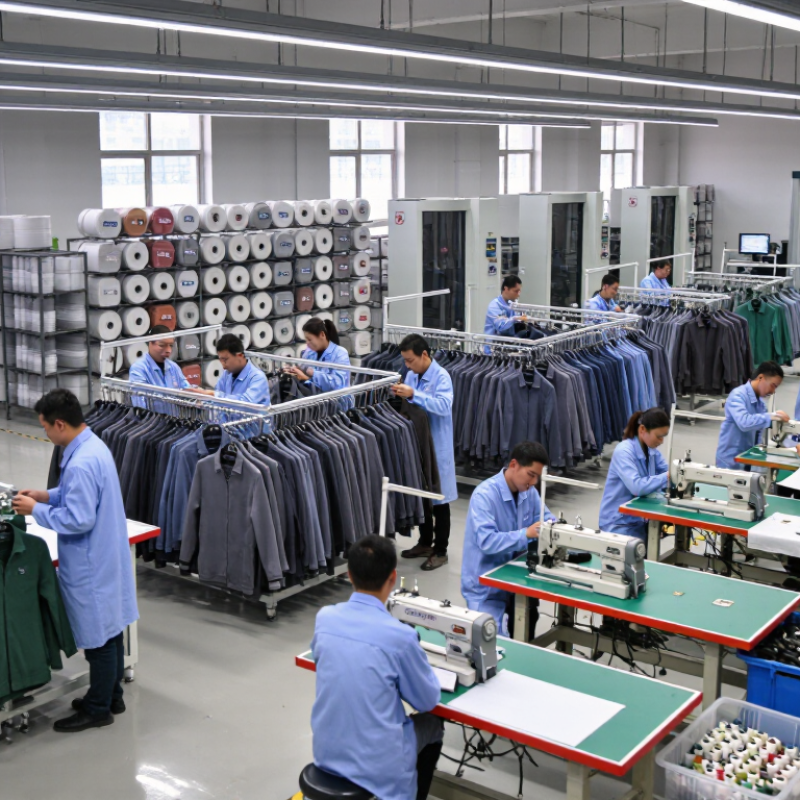
At the factory, cutting plans reduce fabric waste. Workers inspect panels under bright lights, then assemble them with reinforced seams and recycled insulation. Production teams record fabric weight, stitching density, zipper performance, and water-repellent treatment. Small details matter. A weak cuff can reduce a jacket’s useful life.
Verification should follow the material through every production stage. Suppliers may provide recycled-content certificates, transaction records, factory audit reports, and laboratory results. Independent testing can confirm fiber composition, colorfastness, seam strength, and harmful-substance limits. Buyers should compare certificate dates with the actual production order.
Traceability is not always perfect. Mixed fibers can complicate testing. Some factories also rely too heavily on supplier declarations. A careful buyer should request batch samples and inspect production records on site or through an independent auditor. Photos help, but they are not proof. Better suppliers explain limitations clearly and correct inconsistent data instead of hiding it.
China Sustainable Recycled Jackets: Certification Thresholds
Minimum recycled-material content required by widely used textile certification standards
Recycled jacket suppliers commonly manufacture fabrics from recycled polyester flakes or pellets, then convert them into yarn, fabric, and finished garments. The Recycled Claim Standard (RCS) requires at least 5% recycled material, while the Global Recycled Standard (GRS) requires at least 20%. GRS also adds stricter requirements for social, environmental, chemical, and chain-of-custody controls. Buyers should verify transaction certificates, supplier scope certificates, material composition records, and production-traceability documents.
Sources: Textile Exchange, Recycled Claim Standard (RCS) and Global Recycled Standard (GRS) requirements.
Steps for Evaluating and Selecting a Reliable Chinese Supplier
Selecting a reliable Chinese supplier for sustainable recycled jackets requires evidence, not attractive catalogues.
Textile Exchange’s Materials Market Report 2024 recorded 124 million tonnes of global fiber production in 2023. It expects production to reach 160 million tonnes by 2030. This growth increases the need for verified recycled inputs. Ask each supplier for valid GRS or RCS certificates, recycled-content records, and transaction documents. Check whether the certificate covers the actual factory, not only a trading office.
Evaluate production capability through samples and a documented factory audit.
Inspect fabric composition, stitching, zipper strength, insulation recovery, and washing performance. Request laboratory reports for colorfastness, dimensional stability, and restricted substances. Compare the approved sample with a pre-shipment garment. Small differences often reveal weak quality controls. A supplier should explain its corrective-action process and provide realistic lead times. I would also score communication, traceability, worker safety, and order consistency. A polished presentation is not proof.
Tips:
Use a supplier scorecard with weighted criteria. Verify certificates directly with the issuing body. Request batch-level recycled material evidence. Start with a small trial order before scaling. Keep photos, test results, and inspection records. Mistakes still happen. The goal is controlled improvement, not a perfect first decision.
Conclusion
China has become an important sourcing destination for Sustainable Recycled Jackets, offering a wide range of manufacturing capabilities, material options, and customization services. A reliable supplier should demonstrate responsible production practices, transparent sourcing, and experience working with recycled polyester, regenerated nylon, recycled wool, and other certified materials. Relevant certifications can help verify fiber content, environmental claims, social responsibility, and quality management throughout the production process.
Leading suppliers typically use controlled cutting, sewing, dyeing, finishing, and inspection procedures to maintain consistent performance and reduce waste. Buyers should compare production capacity, product development support, fabric choices, customization flexibility, sample policies, lead times, and minimum order quantities. Before making a decision, it is important to review certifications, request material documentation, evaluate samples, communicate quality standards clearly, and confirm inspection procedures. A careful supplier assessment can help businesses select a dependable Chinese partner capable of delivering durable, attractive, and responsibly made recycled jackets.