Choosing the right China Best Bulk Denim Jackets Supplier requires more than comparing catalog prices. Buyers must examine fabric quality, production consistency, compliance records, and delivery reliability. The global denim sector remains commercially significant. Grand View Research identifies denim jeans as a large international apparel category, supported by rising casualwear demand and expanding online retail. Its market analysis also highlights product innovation and sustainable material development as important growth factors.
Cotton Incorporated’s Global Lifestyle Monitor reports that consumers increasingly value comfort, durability, and responsible manufacturing. These expectations directly affect wholesale purchasing decisions. For importers, Bulk Denim Jackets should offer stable sizing, reliable stitching, colorfastness, and flexible customization. A jacket may look attractive in a sample, yet fail after repeated washing or long-distance shipping. That gap matters.
The best supplier is not always the cheapest one. This is where many sourcing plans become weak. A professional evaluation should include factory experience, monthly capacity, quality-control procedures, and transparent fabric specifications. Useful evidence may include audit documentation, laboratory test results, production photos, and verified buyer feedback. Reports from McKinsey & Company also show that fashion companies face growing pressure to improve supply-chain transparency and reduce waste.
However, industry reports provide direction, not guarantees. Market figures differ by research method, region, and product definition. Buyers should validate every claim through samples, pre-production checks, and written specifications. A dependable China supplier should communicate clearly, identify limitations, and correct problems before shipment. That practical discipline often separates a genuine manufacturing partner from a simple trading contact.
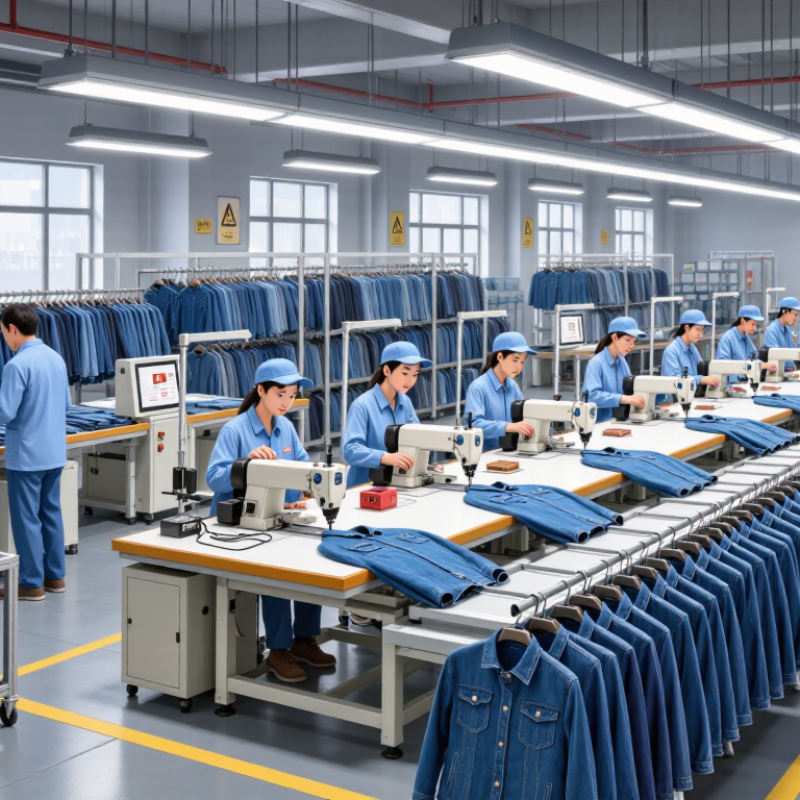
What Makes a China Bulk Denim Jacket Supplier the Best Choice?
What Makes a China Bulk Denim Jacket Supplier the Best Choice?
A strong supplier offers more than a low factory price. The WTO World Trade Statistical Review 2024 identifies China as the largest clothing exporter, holding
about 31.6% of global clothing exports in 2023.
This scale supports wider fabric access, skilled sewing teams, and flexible production for bulk denim jackets. Buyers can request 10 to 14 ounce denim, custom washes, reinforced seams, and graded sizes from one production partner. That reduces unnecessary coordination.
Material knowledge still matters. Textile Exchange’s Materials Market Report 2024 states that
cotton represented about 22% of global fiber production in 2023.
A reliable supplier should explain cotton content, recycled fibers, fabric origin, and finishing chemicals clearly.
Ask for pre-production samples, shrinkage testing, colorfastness results, and measurement records. Third-party inspections can verify carton quantity and stitching consistency before shipment.
Small errors become expensive at scale.
Experience is useful here. A practical buyer should compare three samples under the same light. Dark indigo can hide uneven fading. It happens. Supplier audits, clear payment terms, production photographs, and realistic lead times also reveal operational maturity.
However, no factory is perfect. A supplier may promise fast production, then struggle during peak seasons. The best choice is the one that documents risks honestly and corrects defects quickly, not the one making the loudest claims.
Which Customization and Production Services Should Buyers Expect?
China Best Bulk Denim Jackets Supplier?
Which Customization and Production Services Should Buyers Expect?
A capable bulk denim jacket supplier should offer more than a basic size chart. Buyers need fabric choices, such as 10 to 14 ounce denim, stretch blends, and recycled cotton options. Custom services may include embroidery, printed artwork, metal trims, patches, and adjustable waist tabs. Ask for a physical sample before approving bulk production. Digital images often hide fabric weight and color differences.
Production support should include pattern grading, size specifications, wash development, and pre-production samples. Common finishes include stone washing, enzyme washing, whiskering, and raw denim treatment. Each finish should be tested for shrinkage, colorfastness, and surface damage. A reliable supplier explains minimum order quantities and gives a realistic production schedule. Low prices can hide weak quality control.
Quality checks should cover measurements, seam strength, buttons, zippers, labels, and packaging. Request inspection photos and a clear correction process. Export documents should be accurate and prepared on time. In real factory work, small shade differences can still happen between batches. A strong supplier admits this early. Perfect samples are not guaranteed. Buyers should leave time for revisions, especially with complex washes or oversized fits. Clear communication, documented approvals, and steady progress updates reduce expensive surprises.
China Best Bulk Denim Jackets Supplier: Expected Customization and Production Timeline
Typical bulk denim jacket programs require coordinated services including fabric sourcing, tech-pack development, sampling, fit approval, cutting and sewing, washing, finishing, quality control, and packing. The timeline shown uses practical business-day planning benchmarks; actual lead times vary according to order quantity, fabric availability, customization complexity, and approval speed.
How to Compare Pricing, Minimum Orders, and Manufacturing Capacity
China Best Bulk Denim Jackets Supplier?
Comparing bulk denim jacket suppliers requires more than checking the lowest quote. Grand View Research estimated the global denim jeans market at about US$78 billion in 2023, showing strong demand but also intense price pressure. Request identical specifications from three factories. Include fabric weight, composition, wash, trims, packaging, and inspection terms. A US$12 jacket can become US$16 after sampling, washing, labels, freight, and defect allowances.
Minimum order quantities reveal a factory’s operating model. Small MOQs may suit testing, but they often increase fabric and setup costs. Larger MOQs can reduce unit prices, yet they create inventory risk. Ask whether the MOQ applies per color, style, or total order. Manufacturing capacity needs evidence, not promises. Request monthly output, cutting lines, sewing operators, peak-season lead times, and recent production records. The International Textile Manufacturers Federation regularly reports capacity pressure and supply-chain disruption, so spare capacity matters. One honest weakness: a supplier may quote impressive capacity but lack consistent finishing quality.
Tips: Build a comparison sheet with unit cost, MOQ, lead time, defect rate, and payment terms. Ask for a size-set sample before bulk approval. Check whether quoted prices include fabric testing and metal-detector inspection. Textile Exchange’s 2024 Materials Market Report highlights growing attention to material traceability. Therefore, request fiber composition records and transaction documents. Do not compare factories using price alone. A cheaper sample that fades unevenly is not cheaper.
Conclusion
Choosing the best China supplier for Bulk Denim Jackets requires more than comparing basic prices. Buyers should assess fabric quality, denim weight, color consistency, stitching strength, hardware durability, washing techniques, and overall craftsmanship. A reliable manufacturer should also provide clear customization options, including private labels, size grading, colors, finishes, packaging, and sample development. Consistent quality control from material sourcing to final inspection is essential for building a dependable product line.
Before placing an order, compare minimum quantities, unit costs, production lead times, factory capacity, and the supplier’s ability to handle repeat orders during busy seasons. Shipping experience, accurate documentation, packaging standards, and compliance with destination-market requirements are equally important. Responsive communication, transparent quotations, pre-production samples, inspection support, and after-sales service can reduce risks and simplify cooperation. By evaluating quality, flexibility, pricing, production strength, logistics, and support together, buyers can select a capable supplier that delivers dependable Bulk Denim Jackets for long-term business growth.