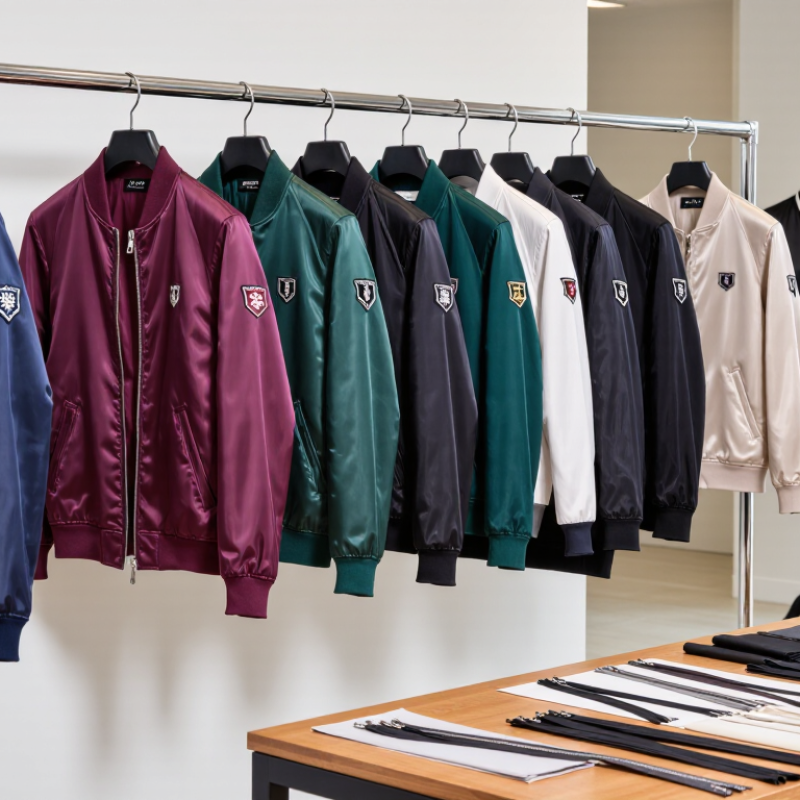
Sourcing Wholesale Satin Jackets for international markets involves more than comparing prices. A jacket may look glossy online, yet arrive with uneven stitching, thin lining, or colors that shift under store lighting. Small details matter. Buyers should check fabric weight, zipper quality, seam finishing, size grading, and whether embroidery or patches can be added consistently. A sample can reveal issues a product photo cannot.
This guide introduces seven suppliers for global buyers and explains what to verify before placing an order. It considers product range, customization options, minimum order quantities, sample access, production timelines, and communication practices. These factors can help retailers, promotional teams, and private-label brands narrow their choices. Still, supplier information changes, and a polished catalog is not proof of dependable production. Ask for current specifications, written lead times, and clear details about shipping and inspection arrangements. Where possible, compare samples from more than one source. That takes extra time. It may also prevent a costly mismatch between the jacket approved and the bulk shipment received. No supplier suits every buyer. The right choice depends on budget, order size, design needs, and how much quality control you can manage. A few questions may remain even after careful research, and that is worth acknowledging.
Wholesale satin jackets sit at the intersection of fabric choice, teamwear, and fashion retail. Satin describes a weave, not a fiber, so the finished surface may use polyester, silk, or blends. That distinction matters. It affects shine, hand feel, care needs, and price. For buyers, a smooth sample under showroom lighting is not enough. Check the lining, seam strength, zipper action, and how the fabric looks after folding.
Material choices shape the market. Textile Exchange’s Materials Market Report 2024 estimates that polyester made up 57% of global fiber production in 2023. This helps explain why polyester satin is common in wholesale ranges: it can support consistent color and scalable production. But the statistic is not a jacket sales forecast. Buyers still need to compare fabric weight, colorfastness results, and sample quality. Ask for test documentation where appropriate. Small details count.
Order planning needs equal care. Request size charts, color references, minimum order quantities, and realistic production timelines before confirming a bulk run. A red jacket can shift noticeably between sample and production batches. That risk deserves attention. Review stitching around pockets and cuffs, since those areas take regular wear. Also clarify whether custom labels or embroidery change the lead time. A low unit price may look attractive, yet freight, packaging, and defect allowances can change the actual cost. Be cautious.
A satin jacket can look polished in a product photo and still disappoint in hand. Request a pre-production sample, then inspect it in daylight and under indoor lighting. The fabric should have an even sheen, with no dull streaks or loose threads around the cuffs. Check the lining, zipper, snaps, and embroidery closely. Small flaws matter. Wear and wash the sample according to its care instructions, then check for color transfer, puckering, or changes in shape. One sample is not proof of consistent production; relying on it alone is an easy mistake.
Ask suppliers for written fabric specifications, size tolerances, minimum order quantities, and production timelines. A reliable supplier should answer clearly and explain how defects are handled, rather than promising everything is perfect. Delays happen. Look for practical evidence of quality control, such as inspection photos, sample approval records, or a documented check before packing. Ask whether the same materials and construction will be used in the bulk order. Compare responses across suppliers, and keep agreed details in writing. A small trial order can reveal communication gaps before a larger commitment, though it takes extra time and may not predict every production issue.
Suggested evaluation weights for comparing suppliers—not measured supplier ratings.
Use the 100-point model to compare quotes, sample quality, production consistency, capacity, delivery performance, communication, and compliance documentation. Verify each item with samples and records before placing a bulk order.
Seven wholesale satin jacket suppliers can serve different buying needs: factory-direct makers, varsity specialists, private-label workshops, teamwear wholesalers, stock distributors, low-minimum-order producers, and sourcing agents. These are supplier types, not endorsements; verify each company’s capacity, references, and sample quality before placing a bulk order. Satin describes a weave, not a fiber, so ask whether the shell is polyester or another material. Textile Exchange’s Materials Market Report 2024 estimates that polyester made up 57% of global fiber production in 2023, a useful reminder to request exact fiber content rather than rely on “satin” alone.
Details matter. Request a pre-production sample and check its shine under daylight, seam strength, lining, zipper action, and rib-knit recovery. Ask for a written size chart, color approval method, carton dimensions, production lead time, and defect policy. For custom jackets, confirm who supplies artwork files and whether embroidery or patches affect delivery dates. Small checks save trouble.
Compare the seven supplier profiles against your order size and destination. A stock distributor may ship quickly, while a cut-and-sew workshop can offer more control over fit and trim. Neither is automatically better. Ask for recent inspection records and clarify whether quoted prices include labeling, packing, and freight. One imperfect sample is not proof of poor workmanship, but it is a reason to ask sharper questions before scaling up.
Wholesale satin jacket suppliers can look similar in product photos, yet their customization options vary widely. Some offer stock colors and simple embroidery, while others can adjust lining, snaps, pocket shape, and woven labels. Request a physical sample before approving a bulk order. A glossy image cannot show whether the fabric catches light evenly or puckers at the seams. Small details matter.
Pricing depends on more than the unit quote. Ask whether setup fees, sample charges, packaging, and shipping are included. Compare quotes for the same fabric weight, jacket construction, and order quantity. A low price may reflect thinner satin or fewer customization choices. That is not always a problem, but it should be clear. Minimum order quantities also differ: some suppliers accept small test runs, while others require larger batches, especially for custom colors. Confirm whether sizes can be mixed within one order.
Tips: Send a clear specification sheet with measurements, color references, artwork placement, and expected quantities. Ask for the MOQ per style and color, plus the cost of one revision. Keep written approval of the sample. I would still allow extra time for production; estimates can slip, and my own planning would not rely on the earliest promised date.
International shipping starts with a clear order sheet, not a last-minute freight booking. Confirm jacket sizes, color names, fabric composition, carton counts, and delivery terms in writing. Ask the supplier to share a packing list and commercial invoice draft before dispatch. A typo in a color code can turn a simple reorder into a slow email chain.
Check the rules for the destination market before production is complete. Satin jackets may need accurate fiber-content and care information, while labels and import documents can vary by country. Ask a qualified customs broker to review product classification and paperwork when details are unclear. Requirements change. Do not rely on an old shipment as proof that the next one will clear the same way. Small details matter.
For shipping, compare transit time, insurance, tracking, and total landed cost—not just the quoted freight rate. Request realistic production and delivery windows, then add room for inspection or port delays. Keep one person responsible for order updates, and share changes promptly with the supplier. In practice, even a tidy tracking sheet can miss a carton split or revised sailing date. Review it against carrier records before promising a launch date to your customers.
These are supplier types, not named or ranked companies. Capabilities vary by supplier; confirm specifications, order terms, export responsibilities, and destination-market requirements in writing.
| Supplier type | Potential fit | What to verify before ordering | International shipping and order controls | Compliance checks |
|---|---|---|---|---|
| Cut-and-sew garment factory | Buyers developing custom satin jackets, linings, trims, or size specifications. | Ask whether the factory handles satin garments, can follow a measurement chart, and will approve a pre-production sample before bulk production. | Confirm who arranges export clearance and freight, the named delivery point, packaging details, production milestones, and the inspection process. | Check the applicable destination rules for fiber-content, origin, and care labeling; verify any restricted-substance requirements relevant to the materials and market. |
| Varsity-jacket specialist | Orders combining satin bodies with features such as rib-knit cuffs, collars, or appliqué work. | Check material and trim options, decoration methods, sample approval, size grading, and whether each component is included in the written quotation. | Agree on a final size-and-color breakdown, carton markings, shipment release conditions, and procedures for handling shortages or defects. | Confirm that labels accurately describe the finished garment and that artwork, patches, and other supplied content are authorized for use. |
| Sportswear or teamwear OEM | Team, club, or event orders that need consistent colors, decoration, and repeatable specifications. | Request a specification sheet covering fabric, lining, closures, decoration placement, color references, tolerances, and approved samples. | Use a signed purchase order with quantities by style, color, and size; set out delivery dates, inspection criteria, and remedies for nonconforming goods. | Review destination-market textile labeling and applicable product-safety rules; confirm any testing or documentation required by the buyer or market. |
| Promotional-apparel manufacturer | Campaigns and organization orders where logos or custom decoration are central to the brief. | Confirm decoration techniques, artwork file requirements, placement tolerances, color matching, and the approval process for a decorated sample. | Set a production and dispatch schedule with a clear approval deadline; agree whether shipments may be split and how cartons will be identified. | Obtain permission for supplied artwork and check local labeling requirements. Do not assume a promotional item is exempt from applicable rules. |
| Trading or export company | Buyers who want a single commercial contact to coordinate production across one or more factories. | Identify the contracting seller and actual manufacturer; check who controls quality inspections, production changes, and after-sales claims. | Name the party responsible for export documentation, freight booking, and customs information. Confirm the agreed Incoterms® rule and named place in the contract. | Ensure product descriptions, declared origin, values, and supporting documents are accurate and consistent across the shipment paperwork. |
| Independent sourcing agent | Buyers needing help locating factories, coordinating samples, or monitoring production in a sourcing region. | Agree on the agent’s scope, fees, conflicts-of-interest disclosure, inspection role, and whether the agent can bind any supplier to contract terms. | Keep the purchase contract, payment recipient, shipping instructions, and document responsibilities clear between buyer, agent, and seller. | Treat the buyer’s import obligations separately from the agent’s services; verify the documents and product information with the responsible seller. |
| Regional wholesale distributor | Buyers prioritizing locally available stock, smaller replenishment orders, or shorter domestic delivery routes. | Verify actual stock by style, color, and size; distinguish ready-to-ship goods from items that require replenishment or customization. | Confirm delivery coverage, dispatch timing, returns policy, and whether cross-border delivery changes the tax or customs arrangements. | Request the product’s origin and labeling details, and confirm that required information is present for the market where the jackets will be sold. |

Check the fabric in daylight and indoor light for an even sheen. Inspect cuffs, lining, zipper, snaps, and embroidery. Small flaws matter. Wash and wear it according to its care instructions, then check for color transfer or puckering.
No. Satin describes a weave, not a fiber. Ask for the exact shell composition in writing, such as polyester or another material.
Request fabric specifications, a size chart with tolerances, minimum order quantities, and production timelines. Confirm how defects are handled. Keep agreed details in writing.
No. One sample cannot prove every jacket will match. Ask whether bulk production will use the same materials and construction. A small trial order may reveal communication gaps, but it takes extra time.
Ask who provides artwork files and whether embroidery or patches affect delivery dates. Approve colors and sizing in writing. A tidy proof can still miss a detail.
Check the packing list and commercial invoice draft. Confirm jacket sizes, color names, fabric composition, carton counts, and delivery terms. A typo can cause a slow email chain.
Check current labeling and import-document requirements before production ends. Ask a qualified customs broker to review unclear product details. Requirements change.
Compare transit time, insurance, tracking, and total landed cost, not just freight rates. Allow room for inspection and port delays. Review tracking against carrier records; a spreadsheet can miss a split carton.
Choosing the right source for Wholesale Satin Jackets starts with understanding the market and the needs of your customers, including preferred styles, fabric weight, and order volume. A dependable supplier should offer consistent materials and workmanship, clear communication, realistic production timelines, and samples or specifications that let you assess quality before placing a larger order. Comparing several suppliers can help you balance product standards with practical purchasing needs.
Before committing, review customization options, pricing details, and minimum order requirements, since these can vary significantly. Also confirm how international shipping is handled, what documentation may be needed for your destination, and how order updates, delays, and quality concerns are managed. A careful comparison of seven potential suppliers using the same criteria can make it easier to identify a partner that fits your budget, delivery expectations, and long-term sourcing plans.